A goiter is a visible enlargement of the thyroid gland. Importantly, its presence does not automatically indicate thyroid malfunction. A goiter can develop when the thyroid produces too much hormone (hyperthyroidism) or too little (hypothyroidism). While iodine deficiency is a primary global cause, other factors include autoimmune conditions like Graves’ disease and Hashimoto’s disease, thyroid nodules, inflammation (thyroiditis), and certain medications. Consequently, a proper medical diagnosis is essential before considering any form of treatment, as the appropriate approach depends entirely on the underlying cause. Self-treating a goiter without understanding its origin can be ineffective and potentially dangerous.
⚠️ **WARNING – Do Not Self-Diagnose or Self-Treat Goiter!**
*A goiter is a medical sign that requires investigation by a qualified healthcare professional. Using herbs like kelp, which is high in iodine, can severely worsen conditions such as Hashimoto’s or Graves’ disease. Always consult your doctor to determine the cause of the goiter before starting any new supplement or herbal remedy.*

The Role of Kelp (Laminariales) in Iodine-Deficient Goiter
Kelp is a type of large brown seaweed rich in essential minerals, most notably iodine. For this reason, it has been traditionally used for goiters specifically caused by iodine deficiency. Iodine is a critical component of thyroid hormones (T3 and T4), and a lack of it forces the thyroid gland to enlarge in an attempt to capture more from the bloodstream. In addition to iodine, kelp provides potassium, magnesium, calcium, and iron.
However, its high and often variable iodine content makes it a potent substance that requires careful and informed use.
Administration Protocol and Safety Limits for Kelp
| Parameter | Guideline |
| Indication | Only for goiter confirmed by a physician to be caused by iodine deficiency. |
| Maximum Daily Dose | Do not exceed a total daily iodine intake of 500 mcg from all sources (food and supplements) unless medically supervised. Check the product label for specific iodine content. |
| Treatment Duration | Maximum 30 days of continuous use. |
| Mandatory Break | A minimum of 14 days between treatment cycles is required to allow the thyroid to regulate. |
| Administration | Take with meals to minimize potential gastric upset. Can be consumed as a powder in smoothies or as dried flakes in soups and salads. |
Overdose Risk: Exceeding the recommended daily intake of iodine can lead to iodine-induced hyperthyroidism, hypothyroidism, or worsen autoimmune thyroid conditions. Symptoms of excess iodine include a metallic taste, increased salivation, and skin lesions.
Specific Biological Limitation of Kelp
The Wolff-Chaikoff and Jod-Basedow Effects: The thyroid gland has complex regulatory mechanisms. A sudden large dose of iodine can trigger the Wolff-Chaikoff effect, temporarily shutting down hormone production to protect against excess. Conversely, in individuals with underlying thyroid autonomy (like nodules), a high iodine load can trigger the Jod-Basedow phenomenon, leading to severe hyperthyroidism. This physiological sensitivity makes unsupervised kelp supplementation risky.
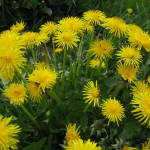
Dandelion (Taraxacum officinale): A Supportive, Not Curative, Role
Traditional remedies involving topical application of dandelion leaves for goiter lack scientific validation and are not recommended. However, dandelion, when consumed as a tea or tincture, may offer supportive benefits due to its well-documented systemic properties. It is not a direct treatment for goiter.
- Diuretic Properties: Dandelion acts as a natural diuretic, which may help reduce general fluid retention and swelling that can accompany some thyroid conditions.
- Anti-inflammatory Action: Its compounds possess anti-inflammatory effects that can support overall systemic health, which is beneficial in cases of thyroiditis (thyroid inflammation).
- Liver Support: Dandelion supports liver function, which is crucial for the conversion of the thyroid hormone T4 into its more active form, T3.
Therefore, while dandelion does not shrink a goiter, it can be a useful component of a holistic plan to support the body’s related systems.
Administration Protocol and Safety Limits for Dandelion
| Parameter | Guideline |
| Form | Tea (from dried root or leaves) or standardized tincture. |
| Maximum Daily Dose | Up to 3 cups of tea per day (using 1-2 teaspoons of dried herb per cup) or as directed on a standardized tincture product. |
| Treatment Duration | Up to 4 weeks of continuous use. |
| Mandatory Break | A 1-2 week break is recommended between cycles. |
| Administration | Best consumed between meals. Ensure adequate hydration due to its diuretic effect. |
Contraindications and Precautions
Kelp
- Absolute Contraindications: Forbidden for individuals with hyperthyroidism, Hashimoto’s disease, Graves’ disease, or thyroid nodules unless explicitly prescribed and monitored by an endocrinologist. Also contraindicated in those with kidney disease due to its high potassium content.
- Vulnerable Populations: Not recommended during pregnancy or breastfeeding due to the risk of fetal/infant thyroid disruption. Avoid in children.
- Major Drug Interactions: Interacts with thyroid medications (Levothyroxine, Methimazole), anti-arrhythmic drugs (Amiodarone), ACE inhibitors, and potassium-sparing diuretics.
- When to Stop Immediately: Discontinue use if you experience heart palpitations, anxiety, insomnia, tremors, or a sudden change in weight.
Dandelion
- Absolute Contraindications: Forbidden for individuals with bile duct obstruction or known allergies to the Asteraceae family (e.g., ragweed, daisies, marigolds).
- Vulnerable Populations: Use with caution during pregnancy and breastfeeding. Consult a practitioner for use in children.
- Major Drug Interactions: May interact with diuretics (potentiating the effect), lithium (decreasing its clearance), and certain antibiotics like Ciprofloxacin (reducing absorption).
Therapeutic Alternatives
If kelp or dandelion are not suitable, other options exist depending on the goiter’s cause.
- Botanical Alternatives with Studies:
- Bugleweed (Lycopus europaeus/virginicus): For goiter associated with mild hyperthyroidism, as studies suggest it can reduce thyroid hormone levels. Requires professional supervision.
- Ashwagandha (Withania somnifera): As an adaptogen, it may help support thyroid function in cases of subclinical hypothyroidism, but more research is needed.
- Pharmacological Options:
- Levothyroxine: A synthetic T4 hormone used to treat hypothyroidism, which often reduces goiter size.
- Antithyroid Drugs (e.g., Methimazole): Used to treat hyperthyroidism by blocking hormone production.
Note: Each alternative has its own specific contraindications and requires medical consultation.
Recent Medical Research (2020-2026)
Recent research continues to highlight the delicate balance of iodine intake. Studies emphasize that both deficiency and excess can precipitate thyroid dysfunction. A 2022 review in the journal *Nutrients* reiterated the U-shaped relationship between iodine intake and thyroid disorders, confirming that excessive consumption from sources like kelp can induce or exacerbate autoimmune thyroiditis. Research on dandelion’s direct effect on the thyroid remains limited; however, studies continue to validate its anti-inflammatory and hepatoprotective properties, which are relevant to overall metabolic health.
Updated Scientific Verdict: Confidence in using kelp is high ONLY for medically confirmed iodine-deficiency goiter. For all other types, it is contraindicated. Confidence in dandelion as a direct goiter treatment is very low, but its role as a supportive diuretic and anti-inflammatory agent is well-established.
Specialist’s Summary
Kelp is a potent source of iodine, useful only for goiters confirmed to be caused by iodine deficiency and must be used cautiously for short durations. It is strictly contraindicated in autoimmune thyroid conditions like Hashimoto’s and Graves’ disease. Dandelion does not treat goiter directly but can offer supportive benefits for liver function and fluid balance. Always prioritize a medical diagnosis, as inappropriate supplementation can significantly harm thyroid health.
Frequently Asked Questions
Can I take kelp for my goiter without seeing a doctor?
No. This is extremely dangerous. A goiter can be caused by conditions that are worsened by iodine, such as Hashimoto’s disease. Taking kelp without a confirmed diagnosis of iodine deficiency can accelerate thyroid gland destruction or trigger severe hyperthyroidism.
Is dandelion a cure for thyroid nodules?
There is no scientific evidence to suggest that dandelion can shrink or cure thyroid nodules. Its benefits are supportive and related to its diuretic and anti-inflammatory properties, not a direct action on thyroid tissue.
What are the first signs I should stop taking kelp?
Stop taking kelp immediately and consult your doctor if you experience heart palpitations, anxiety, tremors, unexplained weight loss, insomnia, or develop a skin rash. These can be signs of excessive iodine intake and induced hyperthyroidism.
Sources and References
- Zimmermann, M. B., & Boelaert, K. (2022). Iodine deficiency and thyroid disorders. *The Lancet Diabetes & Endocrinology*.
- Leung, A. M., & Braverman, L. E. (2014). Consequences of excess iodine. *Nature Reviews Endocrinology*.
- European Medicines Agency (EMA). (2009). Community herbal monograph on Taraxacum officinale.