An Evidence-Based Guide to a Traditional Herbal Tonic for Cold Symptom Support

by Andreea Smiterson
4 comments
A+A-
Reset

Many individuals seek traditional remedies to support their well-being, particularly during seasons when colds and flu are more prevalent. While historical practices relied on natural ingredients, modern science allows us to understand their mechanisms, benefits, and crucial safety limitations. Consequently, this article provides a balanced, evidence-based evaluation of a popular herbal tonic, reframing it from a “natural antibiotic” to a supportive preparation for general wellness.

Importantly, no herbal remedy can replace a medically prescribed antibiotic, which is essential for treating bacterial infections. Using herbal preparations as a substitute for necessary medical care can lead to serious health complications. Therefore, you should always consult a healthcare professional for diagnosis and treatment.

⚠️ WARNING – This preparation is NOT a substitute for antibiotics!

This tonic contains ingredients with mild antimicrobial properties but is not a clinically proven antibiotic. Attempting to treat a bacterial infection (such as strep throat, pneumonia, or a urinary tract infection) with this syrup instead of prescribed medication can result in the infection worsening and potentially becoming life-threatening. Furthermore, some ingredients, particularly garlic, have significant blood-thinning effects and can interact with medications.

Understanding the Traditional Herbal Tonic

This recipe combines several ingredients recognized in phytotherapy for their supportive properties. Instead of viewing it as a “cure,” it is more accurately described as a complementary tonic that may help soothe symptoms associated with the common cold and support the body’s natural defense mechanisms. Indeed, each component contributes a unique profile of active compounds.

Recipe and Preparation

This section outlines the preparation of the traditional syrup with a focus on safety and proper handling.

Ingredients:

    • 3 medium cloves of fresh garlic
    • 2-3 tablespoons of high-quality raw honey
    • 1-inch (approx. 2.5 cm) piece of fresh ginger root
    • ½ tablespoon of crushed red chili flakes (or less, to taste)
    • ½ teaspoon of ground cinnamon (preferably Ceylon)
    • 100 ml (approx. 3.4 fl oz) of freshly squeezed lemon juice

Preparation Method:

    • First, finely mince or crush the fresh garlic cloves to activate the allicin compound. Then, peel and grate the ginger root.
    • Next, combine the crushed garlic, grated ginger, chili flakes, and cinnamon in a clean, sterilized glass jar.
    • Subsequently, pour the fresh lemon juice over the dry ingredients and stir thoroughly to create a uniform mixture.
    • Finally, add the raw honey and mix again until all ingredients are well incorporated.
    • Allow the mixture to macerate at room temperature for at least 3 hours to permit the flavors and compounds to infuse. After this period, seal the jar and store it immediately in the refrigerator.

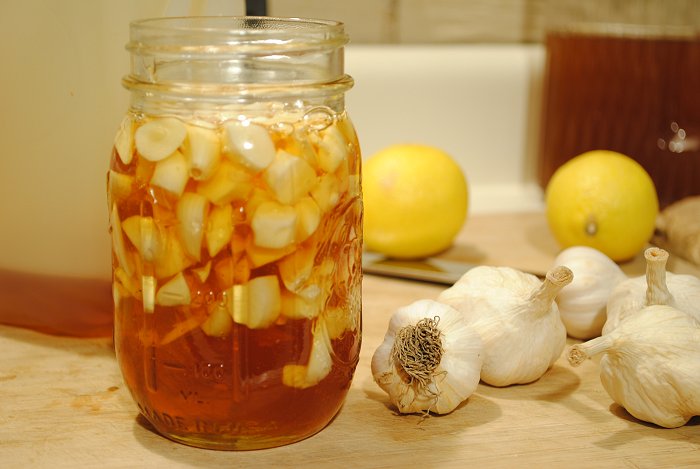
Herbal syrup with garlic and honey

How to Choose Quality Ingredients

The efficacy of this tonic depends heavily on the quality of its components. Therefore, selecting fresh and potent ingredients is crucial.

Ingredient Quality Criteria
Garlic Choose firm, plump bulbs with dry, papery skin. Avoid any that are soft, shriveled, or sprouting green shoots, as these indicate reduced potency.
Ginger Select ginger root with smooth, taut skin. Wrinkled skin suggests it is old and has lost moisture and active compounds.
Honey Opt for raw, unpasteurized honey. Pasteurization can destroy beneficial enzymes and compounds. Local, raw honey is often the best choice.
Cinnamon Use Ceylon cinnamon (“true” cinnamon) instead of Cassia cinnamon. Ceylon has lower levels of coumarin, a compound that can be harmful to the liver in large quantities.

Administration Protocol and Safety Limits

Proper administration is critical for both safety and potential efficacy. Consequently, users must adhere to strict dosage and duration guidelines to avoid adverse effects.

1. Treatment Duration

    • Standard Use: For general support during cold season, consume for a maximum of 7-10 consecutive days.
    • Mandatory Break: After a course of use, you must take a break of at least 14 days before considering another cycle.
    • Maximum Treatments: Do not exceed 4 treatment cycles per year without consulting a healthcare provider. Continuous, long-term use is not recommended.

2. Quantity and Maximum Dose

    • Maximum Daily Dose (Healthy Adult): Do not exceed 3 teaspoons (approximately 15 ml) per day.
    • Dose per Administration: Take 1 teaspoon (5 ml) at a time.
    • Frequency: Consume up to 3 times per day if experiencing cold symptoms. For general support, 1 teaspoon in the morning is sufficient.
    • Overdose Risk: Exceeding the recommended dose significantly increases the risk of adverse effects such as severe gastric irritation, heartburn, and potential interactions due to the concentration of active compounds from garlic and chili.

3. Administration Condition

    • Timing: To minimize the risk of stomach upset from the acidic and pungent ingredients, consume the syrup after a small meal or snack. Avoid taking it on a completely empty stomach.
    • Incompatibilities: Do not take this syrup within 2 hours of consuming anticoagulant or antiplatelet medications.
    • Storage: The syrup must be kept refrigerated in a sealed glass jar and should be discarded after 3 days due to the lack of preservatives. For this reason, always prepare it in small batches.

Specific Biological Limitation

Natural Anticoagulant Effect of Garlic

The primary biological limitation of this tonic comes from garlic (Allium sativum). Specifically, garlic contains organosulfur compounds, most notably allicin and its derivatives, which actively inhibit platelet aggregation. In fact, this mechanism is similar to that of low-dose aspirin. While this can be beneficial for cardiovascular health in some contexts, it poses a significant risk for certain individuals.

Technical Warning: The antiplatelet effect of garlic can substantially increase bleeding time. Therefore, combining this tonic with prescribed anticoagulant drugs (e.g., warfarin), antiplatelet drugs (e.g., clopidogrel, aspirin), or even other supplements with blood-thinning properties (like Ginkgo Biloba or high-dose Vitamin E) can lead to an additive effect. This heightens the risk of bruising, internal bleeding, or uncontrolled hemorrhage during injury or surgery. This effect may persist for several days after discontinuing consumption.

Contraindications and Precautions

Despite its natural origins, this preparation is not safe for everyone. Certain conditions and medications absolutely preclude its use.

Absolute Contraindications

    • Bleeding Disorders: Individuals with hemophilia or other coagulation disorders must avoid this tonic.
    • Pre- and Post-Surgery: Discontinue use at least 10-14 days before any scheduled surgery to prevent excessive bleeding.
    • Gastrointestinal Conditions: People with GERD, peptic ulcers, or severe gastritis should avoid this syrup, as ginger, garlic, and chili can severely irritate the gastric mucosa.
    • Known Allergies: Do not use if you have a known allergy to garlic, ginger, citrus, cinnamon, or bee products.

Vulnerable Populations

    • Pregnancy and Breastfeeding: Researchers have not established its safety. Due to the potent compounds and lack of research, it is best to avoid use.
    • Children: This syrup is absolutely forbidden for infants under 1 year of age due to the risk of infant botulism from honey. For children over 1, consult a pediatrician before use, as the dosage would need significant adjustment.
    • Elderly: Use with extreme caution, as older adults are more likely to be on medications (especially blood thinners) that interact with the ingredients.

Major Drug Interactions

    • Anticoagulants/Antiplatelets (Warfarin, Aspirin, Clopidogrel): Significantly increases the risk of bleeding.
    • Antihypertensive Drugs: Garlic may have a mild blood pressure-lowering effect, potentially enhancing the effect of these medications.
    • HIV Protease Inhibitors (e.g., Saquinavir): Studies show that garlic can reduce the bioavailability of these drugs, decreasing their effectiveness.

Quick Guide: Herbal Tonic Safety

Category Details
❌ Who should AVOID • Individuals on blood thinners (e.g., Warfarin, Aspirin)
• People scheduled for surgery
• Patients with GERD or peptic ulcers
• Pregnant or breastfeeding women
• Infants under 1 year old
📊 Maximum safe dose • Adults: 1 teaspoon (5 ml), up to 3 times/day
• Treatment duration: 7-10 days maximum
• Mandatory break: 14 days
🚨 ALARM signs • Severe heartburn or stomach pain
• Unusual bruising or bleeding
• Allergic reactions (rash, swelling)
• Dizziness or lightheadedness
💊 Major interactions • Anticoagulants and antiplatelet drugs
• HIV medications (Protease Inhibitors)
• Blood pressure medications
⏱️ When to consult doctor IMMEDIATELY if alarm signs appear OR
If cold/flu symptoms do not improve after 5-7 days.

💡 Golden rule: When in doubt, consult a healthcare professional or a qualified herbalist.

Therapeutic Alternatives

If this tonic is not suitable for you, several evidence-based alternatives can support immune health and manage cold symptoms.

Botanical Alternatives with Studies

    • Echinacea (Echinacea purpurea): Numerous studies suggest that echinacea may slightly reduce the risk of catching the common cold and can shorten its duration if taken at the first sign of symptoms. It is available in standardized extracts, tinctures, and teas.
    • Elderberry (Sambucus nigra): Clinical trials have shown that elderberry extract can reduce the severity and duration of influenza symptoms. It is most effective when used as a standardized syrup or lozenge.

Pharmacological and Nutritional Options

    • Zinc Lozenges: When taken within 24 hours of symptom onset, zinc may reduce the duration of a common cold.
    • Vitamin C: While it may not prevent colds in the general population, regular supplementation can reduce the duration and severity of symptoms.
    • Over-the-Counter Medications: For symptom relief, decongestants, pain relievers, and cough suppressants remain effective and reliable options.

Recent Medical Research (2020-2026)

While research on this specific multi-ingredient tonic is nonexistent, recent studies continue to investigate its individual components.

    • A 2022 review on ginger highlighted its potent anti-inflammatory and antioxidant properties, which are beneficial in managing inflammatory conditions that accompany respiratory infections.
    • A 2020 meta-analysis confirmed that honey is effective in providing symptomatic relief for upper respiratory tract infections, particularly cough, often outperforming usual care.
    • Furthermore, ongoing research on garlic consistently confirms its cardiovascular and antimicrobial effects but also repeatedly warns of its interaction with anticoagulant therapies.

Current Limitations: There are no clinical trials validating this specific six-ingredient recipe as an “antibiotic” or “immunity booster.” Its benefits are inferred from the known properties of its parts, not the whole. Therefore, the scientific verdict is that it is a traditional remedy for symptom support, not a treatment for infection.

Specialist’s Summary

This herbal tonic is a traditional preparation useful for providing mild symptomatic relief during the common cold, primarily due to the soothing properties of honey and the anti-inflammatory effects of ginger. However, it is absolutely contraindicated for individuals on blood thinners, those preparing for surgery, and people with severe gastric issues due to the significant anticoagulant and irritant effects of its ingredients. Validated alternatives with stronger clinical evidence include Echinacea for cold prevention and Elderberry for managing flu symptoms.

Frequently Asked Questions

Can this herbal syrup replace antibiotics?
Absolutely not. Antibiotics are powerful medicines that fight specific bacterial infections. This syrup has no proven efficacy against systemic bacterial infections in the human body. Consequently, using it in place of a prescribed antibiotic is dangerous and can lead to severe health consequences.

How long does it take for this tonic to work?
This is not a drug with a defined onset of action. Users may feel a soothing effect on a sore throat or cough shortly after consumption due to the honey and ginger. However, any systemic immune-supportive effects are mild and cumulative, not immediate.

Is this herbal tonic safe for children?
It is strictly forbidden for children under one year old because raw honey poses a risk of infant botulism. For older children, you should consult a pediatrician before administration, as the dose would need to be significantly reduced and the pungent ingredients may be too harsh.

What are validated alternatives for supporting the immune system?
Clinically recognized options for immune support include adequate sleep, a balanced diet, regular exercise, and targeted supplements like Vitamin D and Zinc. For managing cold and flu, botanical products like Echinacea and Elderberry have more robust scientific backing.

Sources and References

Recent Studies (2020-2026):

    • Abuelgasim, H., Albury, C., & Lee, J. (2021). Effectiveness of honey for symptomatic relief in upper respiratory tract infections: a systematic review and meta-analysis. BMJ Evidence-Based Medicine, 26(2), 57-64.
    • Arablou, T., Aryaeian, N., Valizadeh, M., Sharifi, F., Hosseini, A., & Djalali, M. (2021). The effect of ginger consumption on inflammatory markers in adults: A systematic review and meta-analysis of randomized controlled trials. Phytotherapy Research, 35(6), 2887-2902.

Official Monographs:


You may also like

4 comments

Kat Bird
Kat Bird October 3, 2014 - 20:45

I will be trying this for sure

Reply
Carol Samayoa
Carol Samayoa October 7, 2014 - 03:33

I need to learn how 2 make all of this good stuff

Reply
Karen Wibberley
Karen Wibberley June 15, 2015 - 06:25

Bit confusing as it days you can’t keep it more than a day, but then says you can make more if you want it to last longer. Am I reading it wrong? x

Reply

Leave a Comment