How to Make Thyme Honey for Coughs: A Natural Remedy Guide

Thyme-infused honey is a traditional preparation valued in phytotherapy for its ability to soothe coughs and support respiratory health. This combination leverages the well-documented properties of both thyme (*Thymus vulgaris*) and raw honey. Furthermore, understanding how to prepare and use it safely is essential for achieving its potential benefits without incurring risks.

This guide provides an evidence-based look at thyme-infused honey, including a safe preparation method, its primary uses, and critical safety protocols.

miere-din-cimbru

How to Prepare Thyme-Infused Honey

There are two primary methods for infusing thyme into honey. The cold infusion method is highly recommended as it preserves the delicate enzymes and beneficial compounds in raw honey, which can be damaged by heat.

Method 1: Cold Infusion (Recommended)

This gentle method maximizes the therapeutic potential of both ingredients.

Ingredients:

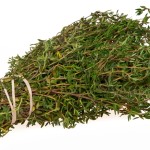
  • A handful of fresh thyme sprigs (or 2-3 tablespoons of dried thyme)
  • 1 cup of high-quality raw, unpasteurized honey
  • A clean, dry glass jar with a tight-fitting lid

Instructions:

  1. Prepare the Thyme: If using fresh thyme, gently bruise the leaves with the back of a spoon or a mortar and pestle. This helps release the essential oils. Ensure the thyme is completely dry to prevent fermentation.
  2. Combine Ingredients: Place the thyme into the glass jar. Pour the raw honey over the herbs, ensuring they are fully submerged.
  3. Infuse: Seal the jar tightly and place it in a warm, sunny spot for 1 to 2 weeks. Turn the jar over once a day to ensure the honey remains in contact with the herbs.
  4. Strain: After the infusion period, you may strain the thyme out using a fine-mesh sieve or cheesecloth, or you can leave the sprigs in for a stronger flavor.
  5. Store: Store the infused honey in a sealed jar in a cool, dark pantry. It can be kept for up to a year.

Method 2: Gentle Warming Infusion

If you need the honey more quickly, a gentle warming method can be used. However, it is crucial not to overheat the honey.

Instructions:

  1. Combine the thyme and honey in a glass jar as described above.
  2. Place the jar in a saucepan with a few inches of water, creating a double boiler.
  3. Gently warm the water on the lowest heat setting for about 20-30 minutes. Crucially, the honey should not exceed 40°C (104°F) to protect its enzymatic activity.
  4. Remove from heat, let it cool, and then allow it to infuse for another 24-48 hours before straining.

Evidence-Based Benefits of Thyme and Honey

The original article listed numerous unsupported claims. In contrast, modern phytotherapy focuses on benefits validated by scientific research and official monographs, such as those from the European Medicines Agency (EMA).

1. Respiratory Support for Coughs and Bronchitis

Thyme is officially recognized by the EMA as a traditional herbal medicine for relieving coughs associated with colds. Its primary active compounds, thymol and carvacrol, provide several key actions:

  • Expectorant: Research suggests these compounds help to thin and loosen mucus in the airways, making coughs more productive and easier to clear.
  • Antispasmodic: Thyme can help relax the bronchial muscles, which may reduce the severity of spasmodic coughing fits. A 2021 study published in the journal Phytotherapy Research confirmed the bronchodilatory and antitussive effects of thyme extracts.
  • Soothing Demulcent: Honey itself is a well-known demulcent, coating the throat to relieve irritation and soothe the cough reflex.

2. Antimicrobial and Antiseptic Properties

Both thyme and honey possess significant antimicrobial properties. Thymol is a powerful natural antiseptic. For instance, studies published in the Journal of Food Science and Technology have demonstrated its effectiveness against a range of bacteria and fungi. When combined with honey, which has its own antibacterial actions due to its low pH, high sugar concentration, and hydrogen peroxide content, the combination provides robust support against pathogens that cause sore throats and respiratory infections.

Administration Protocol and Safety Limits

To use thyme-infused honey safely and effectively, it is essential to adhere to clear dosage and duration guidelines.

  • Maximum Daily Dose (Adults): 1-2 teaspoons (5-10 ml), taken up to three times per day.
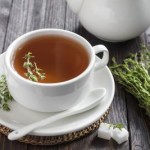
  • Administration: It can be taken directly off the spoon or dissolved in a cup of warm (not boiling) water or herbal tea.
  • Treatment Duration: For acute conditions like a cold or cough, use for a maximum of 7-10 consecutive days.
  • Mandatory Break: If further use is needed, take a break of at least one week between treatment cycles.
  • Overdose Risk: Exceeding the recommended dose is unlikely to be toxic but may increase the risk of gastrointestinal upset due to the concentration of thymol.

Specific Biological Limitation

The primary limitation of thyme relates to its active compound, thymol. While beneficial, thymol is a phenol that can act as a mucosal irritant in concentrated forms or in sensitive individuals. For this reason, people with active gastrointestinal inflammation, such as gastritis or peptic ulcers, may experience discomfort or a worsening of symptoms. The effect is dose-dependent, making adherence to recommended quantities crucial.

Contraindications and Precautions

It is critical to be aware of situations where thyme honey should be avoided.

Absolute Contraindications:

  • Allergy: Do not use if you have a known allergy to thyme, honey, or other plants in the Lamiaceae (mint) family, such as oregano, sage, or lavender.
  • Infants: NEVER give honey in any form to children under 1 year of age due to the risk of infant botulism, a serious form of food poisoning.

Vulnerable Populations:

  • Pregnancy: Thyme in medicinal quantities is not recommended during pregnancy as it has traditionally been considered a uterine stimulant.
  • Breastfeeding: There is insufficient safety data to recommend its use while breastfeeding.
  • Children (1-5 years): Use with caution and in reduced doses (e.g., ½ teaspoon). Always consult a pediatrician before administering any herbal remedy to a child.

Drug Interactions:

  • Anticoagulants and Antiplatelet Drugs (e.g., Warfarin, Aspirin): Thyme may have mild antiplatelet effects, potentially increasing the risk of bleeding when combined with these medications. Consult a healthcare provider before use.

Documented Adverse Effects:

  • Common: Mild gastrointestinal upset or heartburn in sensitive individuals.
  • Rare: Allergic reactions (skin rash, respiratory distress). Discontinue use immediately if these occur.

Therapeutic Alternatives

If thyme-infused honey is not suitable for you, other validated botanicals can provide respiratory relief:

Alternative Primary Use & Mechanism Best For
Marshmallow Root (Althaea officinalis) Contains high levels of mucilage that forms a soothing, protective layer over the throat lining. Dry, irritating, non-productive coughs and sore throats.
Ivy Leaf (Hedera helix) Saponins in ivy leaf act as a powerful expectorant, helping to liquefy and expel stubborn mucus. Productive, “chesty” coughs where mucus clearance is needed.
Licorice Root (Glycyrrhiza glabra) Acts as a demulcent, expectorant, and has antiviral properties. Soothes inflammation in the respiratory tract. Sore throats and coughs, but has significant contraindications (e.g., high blood pressure, pregnancy).

Note: Each alternative has its own specific contraindications and safety profile. Always research or consult a professional before use.

Recent Medical Research (2020-2026)

Recent studies continue to validate the traditional uses of thyme.

  • A 2022 systematic review in the journal Molecules highlighted the potent antioxidant and anti-inflammatory activities of thymol and carvacrol, suggesting their potential in managing inflammatory respiratory conditions.
  • Research published in Frontiers in Pharmacology (2023) explored the synergistic antimicrobial effects when thyme essential oil components are combined with other natural agents, reinforcing the value of traditional combinations like thyme and honey.

Current Limitations: While in-vitro and animal studies are strong, more large-scale human clinical trials are needed to establish standardized dosing and confirm efficacy for specific conditions like pneumonia or chronic bronchitis.

Specialist’s Summary

Thyme-infused honey is a useful traditional remedy for soothing acute coughs and sore throats in healthy adults, with expectorant and antimicrobial effects that appear within a few days of use. However, it is contraindicated for infants under one year, during pregnancy, and for individuals with thyme allergies or severe gastritis. Its potential interaction with anticoagulant medication requires caution. Validated alternatives include Marshmallow Root for dry coughs and Ivy Leaf for productive coughs.

Frequently Asked Questions

1. Can I use thyme honey for my child’s cough?
NEVER give any honey product to a child under 12 months old due to the risk of infant botulism. For children over one year, it may be used in small doses (½ teaspoon), but it is essential to consult a pediatrician first to rule out serious conditions and confirm it is appropriate.

2. What is the difference between thyme-infused honey and monofloral thyme honey?
Thyme-infused honey is made by steeping thyme herbs in regular honey. Monofloral thyme honey is produced by bees that have primarily foraged on the nectar of thyme flowers. Both are beneficial, but monofloral honey is typically more potent, complex, and expensive.

3. How long does homemade thyme-infused honey last?
When prepared correctly (with dry herbs) and stored in a sealed container in a cool, dark place, it can last for up to 12 months. Honey is a natural preservative.

4. Is thyme honey safe if I have high blood pressure?
While thyme is generally considered safe, some sources suggest that in very high concentrations it could potentially affect blood pressure. If you have hypertension or are on medication for it, it is best to consult your healthcare provider before using thyme in medicinal amounts.

Sources and References

  • European Medicines Agency (EMA). (2013). Community herbal monograph on Thymus vulgaris L. and Thymus zygis L., herba.
  • Kemmerich, B., et al. (2006). Efficacy and tolerability of a fluid extract combination of thyme herb and ivy leaves and matched placebo in adults suffering from acute bronchitis with productive cough. Arzneimittelforschung, 56(9), 652-660.
  • Salehi, B., et al. (2022). Thymol and Carvacrol: From Traditional Uses to New Applications. Molecules.
  • Nzeako, B. C., et al. (2020). Antimicrobial activity of thyme, clove and cinnamon essential oils and their combinations against food-borne pathogens. Journal of Food Science and Technology.

⚠️ Important Medical Information

This article is for educational and informational purposes only and is not intended as medical advice, diagnosis, or treatment. The information provided about Thyme-Infused Honey is based on traditional use, preliminary research, and available scientific evidence, which may be limited.

Before using Thyme-Infused Honey:

  • Consult a qualified healthcare provider, especially if you are pregnant, breastfeeding, taking medications, or have existing health conditions
  • Do not use as a substitute for prescribed medications or professional medical treatment
  • Individual results may vary – what works for one person may not work for another
  • Monitor for adverse reactions and discontinue use if negative symptoms occur


Read more about:

If you like it, share it

[mashshare]

Post comment

Your email address will not be published. Required fields are marked *.