Garlic and Thyme for Vaginal Infections: What Research Suggests
Vaginal infections, such as vaginitis and candidiasis, are among the most common reasons women seek medical consultation. While conventional treatments like oral or topical antifungals are often effective, there is growing interest in complementary botanical options. Specifically, research has explored the potential of garlic and thyme due to their long history in traditional medicine as antimicrobial agents.
However, it is crucial to approach this topic with a clear understanding of the scientific evidence, mechanisms of action, and, most importantly, safety protocols. This article provides an evidence-based overview of how garlic and thyme may support vaginal health, based on clinical findings.

The Scientific Evidence: A Clinical Comparison
A notable study in this area was a clinical trial conducted by researchers at Isfahan University of Medical Sciences. The research, published in 2010, aimed to compare the efficacy of a specially formulated vaginal cream containing garlic and thyme with the standard antifungal medication, clotrimazole cream.
The study involved 64 women diagnosed with vaginal candidiasis. They were divided into two groups: one received the garlic-thyme cream, and the other received clotrimazole cream. Participants reported common symptoms such as vaginal irritation, itching, edema, and painful urination.
Interestingly, at the conclusion of the treatment period, researchers observed that the therapeutic outcomes were remarkably similar in both groups. The study concluded that the garlic and thyme cream was as effective as clotrimazole in reducing the symptoms of vaginal candidiasis, suggesting its potential as a viable therapeutic option.
How Do Garlic and Thyme Work?
The potential effectiveness of this combination is rooted in the well-documented antimicrobial properties of its active compounds.
Garlic (Allium sativum)
Garlic’s potent effects are primarily attributed to a sulfur compound called **allicin**. When a garlic clove is crushed or chopped, an enzyme called alliinase converts alliin into allicin. According to scientific literature, allicin exhibits broad-spectrum antimicrobial activity. For instance, it is believed to inhibit key fungal enzymes, disrupting the metabolism and growth of pathogens like *Candida albicans*. Furthermore, some studies suggest that garlic may also help modulate the immune response, supporting the body’s natural defense mechanisms.
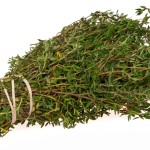
Thyme (Thymus vulgaris)
Thyme is a well-regarded medicinal herb, and its efficacy is largely due to two powerful phenolic compounds: **thymol** and **carvacrol**. These compounds are recognized for their strong antiseptic, antifungal, and antibacterial properties. In fact, their potency is why they are often included in commercial products like antiseptic mouthwashes and soaps. Both thymol and carvacrol work by disrupting the cell membrane of microorganisms, leading to cell leakage and death.
Administration Protocol and Safety Limits
Using garlic and thyme for vaginal health requires extreme caution. The clinical study used a standardized, formulated cream, **not raw ingredients**. Applying raw garlic or essential oils directly to sensitive vaginal tissue is dangerous and not recommended.
* **Formulation:** Only use commercially prepared vaginal creams or suppositories that contain standardized extracts of garlic and thyme. Do not attempt to create a homemade version.
* **Treatment Duration:** Follow the product’s instructions or a healthcare provider’s recommendation, which is typically 7-14 days.
* **Mandatory Break:** Do not use these products continuously. If symptoms persist, consult a healthcare professional.
* **Maximum Dose:** Use only the amount specified on the product label, typically one applicator full per day. Overuse will not increase efficacy and significantly raises the risk of irritation.
* **Timing:** Application is generally recommended at bedtime to allow the cream to remain in place for several hours.
⚠️ **WARNING: Never Insert Raw Garlic Cloves into the Vagina.** This common internet “remedy” is ineffective and dangerous. It can cause severe chemical burns to the mucosal lining, disrupt the natural vaginal flora, and potentially introduce harmful bacteria, worsening the infection.
Specific Biological Limitation
The active compounds in garlic (allicin) and thyme (thymol, carvacrol) are potent irritants to mucous membranes. While effective against pathogens in a properly buffered cream, direct application can cause significant inflammation, pain, and tissue damage. This inflammatory response can disrupt the delicate balance of the vaginal microbiome, potentially allowing opportunistic pathogens to flourish and making the initial condition worse.
Contraindications and Precautions
Before considering any herbal preparation, it is essential to be aware of potential risks and contraindications.
Absolute Contraindications
- Allergy: Do not use if you have a known allergy to garlic, thyme, or any other members of the Lamiaceae (mint) or Amaryllidaceae (lily) families.
- Broken Skin or Open Sores: Avoid application to irritated or broken skin in the vaginal area, as this can cause intense burning and pain.
Vulnerable Populations
- Pregnancy and Breastfeeding: There is insufficient safety data for the use of topical garlic and thyme preparations during pregnancy or lactation. Therefore, it is strongly advised to avoid them and consult a doctor for approved treatments.
- Children: These products are not intended for pediatric use.
Documented Adverse Effects
- Common: Mild, temporary burning, itching, or irritation upon application.
- Severe (Rare): Allergic contact dermatitis, significant swelling, or chemical burns if improperly used.
When to Stop Immediately: Discontinue use and consult a doctor if you experience severe pain, intense burning that does not subside, blistering, or a worsening of your symptoms.
Therapeutic Alternatives
If a garlic and thyme preparation is not suitable or available, other options with scientific backing exist for supporting vaginal health.
| Alternative | Mechanism and Use |
|---|---|
| Boric Acid Suppositories | Possess mild antiseptic and antifungal properties. Often recommended for recurrent or resistant yeast infections and bacterial vaginosis. Must be used as a vaginal suppository and is toxic if ingested orally. |
| Probiotics (Lactobacillus strains) | Available as oral capsules or vaginal suppositories. They help restore the natural acidic pH and healthy bacterial balance of the vagina, making it harder for pathogens like Candida to thrive. Strains like L. rhamnosus and L. reuteri are well-studied. |
| Tea Tree Oil (diluted) | Contains terpinen-4-ol, a potent antifungal compound. It must be heavily diluted in a carrier oil and used in commercially prepared suppositories. Never use undiluted tea tree oil, as it can cause severe burns. |
*Note: Always consult a healthcare provider before trying any new treatment, as each alternative has its own specific contraindications and safety protocols.
Recent Medical Research (2020-2026)
While the 2010 study remains a key piece of evidence, subsequent research has continued to explore botanicals for vaginal health. A 2021 systematic review published in the journal Mycoses evaluated various herbal medicines for vulvovaginal candidiasis. The review confirmed that compounds in garlic and thyme show significant antifungal activity in laboratory (in vitro) settings.
However, the authors also highlighted a major limitation in the field: a lack of large-scale, high-quality human clinical trials. While preliminary results are promising, more robust research is needed to establish standardized dosages, long-term safety, and definitive efficacy compared to conventional treatments. The current scientific verdict is that garlic and thyme show potential but are not yet a replacement for standard medical care.
Specialist’s Summary
Formulated creams containing garlic and thyme show promise for supporting the management of vaginal candidiasis, with preliminary effects comparable to clotrimazole in one clinical trial. Their utility stems from the antifungal actions of allicin, thymol, and carvacrol. However, these preparations are contraindicated for those with allergies and must be avoided during pregnancy. The primary risk is mucosal irritation, especially if raw ingredients are improperly used. Validated alternatives include boric acid suppositories and targeted probiotics.
Frequently Asked Questions
Can I use garlic and thyme cream instead of my doctor’s prescription?
No. You should not replace a prescribed medical treatment without consulting your healthcare provider. This information is for educational purposes, and these products should be considered a complementary approach discussed with your doctor.
Is it safe to eat garlic to help with a vaginal yeast infection?
While consuming garlic as part of a healthy diet may offer general immune support, there is no strong clinical evidence that eating it will resolve an active vaginal infection. Topical application, in a properly formulated cream, is the method studied for this condition.
What’s the difference between using a cream and using essential oils?
A formulated cream is specifically designed for vaginal use, with buffered pH and a safe concentration of active ingredients. Essential oils are highly concentrated and can cause severe chemical burns if applied to sensitive mucosal tissues, even when diluted. Never use essential oils internally without expert medical guidance.
Sources and References
- Bahadoran, P., Rokni, F. K., & Fahami, F. (2010). The effect of a garlic and thyme cream on candidal vaginitis. Iranian Journal of Nursing and Midwifery Research, 15(Suppl1), 323–329.
- Ribeiro, F. C., de Barros, P. P., & Rossoni, R. D. (2021). Herbal medicine in the management of vulvovaginal candidiasis: A systematic review. Mycoses, 64(11), 1261–1272. https://onlinelibrary.wiley.com/doi/abs/10.1111/myc.13368
- World Health Organization (WHO). (1999). WHO Monographs on Selected Medicinal Plants – Volume 1. [Monograph on Bulbus Allii Sativi].
⚠️ Important Medical Information
This article is for educational and informational purposes only and is not intended as medical advice, diagnosis, or treatment. The information provided about Garlic and Thyme is based on traditional use, preliminary research, and available scientific evidence, which may be limited.
Before using Garlic and Thyme preparations:
- Consult a qualified healthcare provider, especially if you are pregnant, breastfeeding, taking medications, or have existing health conditions like recurrent infections.
- Do not use as a substitute for prescribed medications or professional medical treatment.
- Individual results may vary – what works for one person may not work for another.
- Monitor for adverse reactions and discontinue use if negative symptoms such as severe burning or increased irritation occur.
Regulatory status: Herbal preparations containing Garlic and Thyme are typically considered dietary supplements or traditional remedies and have not been evaluated by the FDA for treating, curing, or preventing any disease.


How can it be used?
Great ill be willing to give it a try