Understanding Blood Pressure Guidelines by Age: A Comprehensive Medical Overview

by Elena Martin
0 comments
A+A-
Reset

Regularly monitoring blood pressure is a fundamental aspect of maintaining long-term health. Uncontrolled high blood pressure, or hypertension, is a primary risk factor for severe cardiovascular events. Specifically, it can inflict significant damage on arteries, leading to heart attack, stroke, heart failure, and chronic kidney disease. Consequently, healthcare providers often recommend proactive management strategies to maintain blood pressure within a healthy range and prevent these serious complications. However, it is important to recognize that a “one-size-fits-all” approach is not medically appropriate for blood pressure management. Normal values can vary considerably based on factors such as age, sex, and underlying health conditions. Therefore, understanding age-specific guidelines is the first step toward effective and personalized health management.

⚠️ WARNING – Hypertension is Often a “Silent Killer”!

Hypertension typically presents with no obvious symptoms in its early stages. For this reason, many individuals are unaware they have the condition until a serious health event, such as a heart attack or stroke, occurs. Indeed, this lack of warning signs underscores the critical importance of regular and accurate blood pressure screenings for all adults.

Understanding Blood Pressure Categories

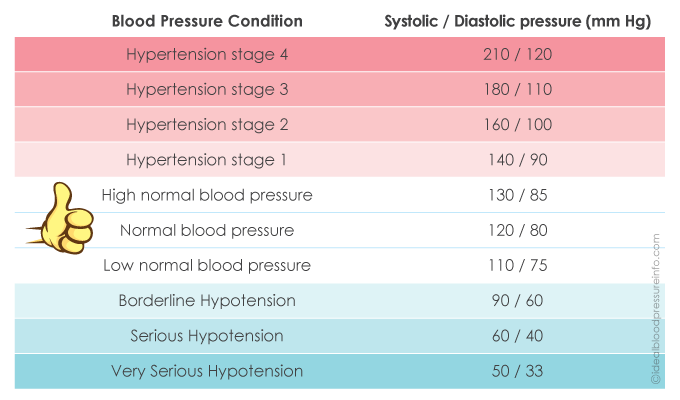
A blood pressure reading consists of two numbers: systolic pressure (the top number) and diastolic pressure (the bottom number). Systolic pressure measures the force your heart exerts on the walls of your arteries each time it beats. In contrast, diastolic pressure measures the force in the arteries when your heart is resting between beats. The American Heart Association (AHA) provides the following categories for adults aged 20 and over.

Blood Pressure Category Systolic mm Hg (Top Number) Diastolic mm Hg (Bottom Number)
Normal Less than 120 and Less than 80
Elevated 120 – 129 and Less than 80
Hypertension, Stage 1 130 – 139 or 80 – 89
Hypertension, Stage 2 140 or higher or 90 or higher
Hypertensive Crisis
(Consult your doctor immediately)
Higher than 180 and/or Higher than 120

The following chart provides a visual reference for these categories.

blood-pressure-chart

Blood Pressure Reference Ranges by Age

While the adult categories above are standard, baseline blood pressure changes throughout life. For instance, children naturally have lower blood pressure than adults. Furthermore, blood pressure tends to rise with age due to factors like increased arterial stiffness. The table below offers general reference ranges, but a healthcare professional must interpret these values in the context of an individual’s overall health profile.

blood-pressure-chart-by-age1

Protocol for Accurate Blood Pressure Measurement

A single high reading does not automatically confirm a diagnosis of hypertension. Blood pressure fluctuates naturally throughout the day and can be influenced by stress, physical activity, or caffeine intake. Therefore, following a standardized protocol is essential for obtaining accurate and reliable measurements.

Frequency of Monitoring

The American Heart Association recommends that adults aged 20 and older with normal blood pressure have a check at least once every two years during a regular healthcare visit. However, individuals with elevated blood pressure or other risk factors should monitor it more frequently, as advised by their physician. Home blood pressure monitoring is often recommended for consistent tracking.

Proper Measurement Technique

    • Preparation: Avoid caffeine, exercise, and smoking for at least 30 minutes before measurement. Additionally, empty your bladder, as a full bladder can slightly raise your reading.
    • Rest: Sit quietly in a comfortable chair for at least 5 minutes before taking a reading.
    • Positioning: Sit with your back straight and supported. Keep your feet flat on the floor and your legs uncrossed. Your arm should be supported on a flat surface, such as a table, with the upper arm at heart level.
    • Cuff Placement: Use a properly sized cuff. The cuff should be placed on your bare upper arm, with the bottom edge about one inch above the bend of your elbow.
    • Measurement: Remain still and silent while the measurement is in progress. Take two or three readings one minute apart and record the average.

Specific Biological Limitation: The Pathophysiology of Hypertension

Endothelial Damage and Arterial Stiffness: Chronic hypertension exerts excessive force on the delicate inner lining of the arteries, known as the endothelium. This sustained pressure causes mechanical damage, leading to inflammation and dysfunction. As a result, the arteries lose their natural elasticity and become stiff and narrow (a condition called arteriosclerosis). This process not only perpetuates high blood pressure but also significantly increases the risk of blood clots, which can cause a stroke or heart attack.

This biological limitation means that once hypertension begins to damage the arterial system, it creates a vicious cycle. Stiffer arteries require the heart to pump harder, which further elevates blood pressure and accelerates damage. For this reason, early intervention is crucial to prevent irreversible vascular changes.

Contraindications and Precautions

Major Risk Factors for Hypertension

Certain factors significantly increase the likelihood of developing high blood pressure. Some are non-modifiable, while others are related to lifestyle.

    • Non-Modifiable Risks: Age (risk increases over 65), family history (genetics), and ethnicity (more common in people of African heritage).
    • Modifiable Risks: Obesity or being overweight, a sedentary lifestyle, a diet high in sodium and low in potassium, excessive alcohol consumption, and tobacco use.
    • Associated Conditions: Chronic kidney disease, diabetes, and sleep apnea are strongly linked to hypertension.

Vulnerable Populations

    • Pregnant Women: May develop gestational hypertension or preeclampsia, a serious condition that requires close medical supervision to protect both mother and baby.
    • Elderly: More susceptible to isolated systolic hypertension (high top number) and are more sensitive to the side effects of medications.
    • Children and Adolescents: While less common, hypertension in younger populations is often linked to obesity and may indicate an underlying medical issue.

Therapeutic Alternatives: Evidence-Based Management Strategies

If lifestyle modifications are insufficient, a physician may recommend pharmacological treatment. However, foundational lifestyle changes are the first line of defense and remain essential even when medication is prescribed.

1. Lifestyle and Dietary Interventions (Non-Pharmacological)

    • DASH Diet: The Dietary Approaches to Stop Hypertension (DASH) eating plan is rich in fruits, vegetables, whole grains, and low-fat dairy products. It has been clinically proven to lower blood pressure.
    • Sodium Reduction: Limiting dietary sodium intake to less than 1,500 mg per day can have a significant impact.
    • Regular Physical Activity: Aim for at least 150 minutes of moderate-intensity aerobic exercise per week.
    • Limit Alcohol and Quit Tobacco: Reducing alcohol intake and ceasing all tobacco use are critical for cardiovascular health.

2. Pharmacological Options

When necessary, a healthcare provider may prescribe medications such as diuretics, ACE inhibitors, beta-blockers, or calcium channel blockers. The choice of medication depends on the individual’s overall health profile, the severity of hypertension, and the presence of other medical conditions. Importantly, patients should never start, stop, or change medication without direct medical supervision.

Quick Guide: Blood Pressure Safety

Category Details
❌ Who is at High Risk • Individuals with a family history of heart disease
• People with diabetes or chronic kidney disease
• Adults over the age of 65
• Individuals who are overweight or obese
📊 Target Blood Pressure • General Adult Target: Below 130/80 mm Hg
• Healthy Adult Goal: Below 120/80 mm Hg
• Monitoring Frequency: Varies from daily to annually based on risk
🚨 ALARM signs (Hypertensive Crisis) • Severe headache
• Shortness of breath
• Nosebleeds
• Severe anxiety or confusion
💊 Common Interacting Substances • NSAIDs (e.g., ibuprofen)
• Decongestants
• Certain herbal supplements (e.g., licorice, St. John’s Wort)
⏱️ When to consult a doctor IMMEDIATELY if alarm signs appear OR
If home readings are consistently above 130/80 mm Hg

💡 Golden rule: When in doubt, always consult a healthcare professional for guidance!

Recent Medical Research (2020-2026)

Recent research continues to refine our understanding of blood pressure management. Notably, studies emphasize the importance of out-of-office blood pressure measurements, such as home monitoring and 24-hour ambulatory monitoring, to overcome issues like “white-coat hypertension” (high readings only in a clinical setting) and “masked hypertension” (normal readings in-office but high readings elsewhere).

    • A 2023 meta-analysis highlighted the significant benefits of structured home blood pressure monitoring combined with telehealth counseling for achieving better control.
    • Current guidelines from organizations like the AHA and the European Society of Cardiology (ESC) increasingly recommend a target of less than 130/80 mm Hg for most adults, including older individuals, provided the treatment is well-tolerated. This reflects a shift towards more intensive control to further reduce cardiovascular risk.

Current limitations: Research is ongoing to determine optimal blood pressure targets for very elderly patients (over 80) and those with multiple chronic conditions, where the risks of intensive treatment might outweigh the benefits.

Specialist’s Summary

Blood pressure is a vital health metric that must be managed proactively, with target values ideally below 130/80 mm Hg for most adults. Hypertension is a chronic condition that damages arteries silently over time, making regular, accurate measurement essential for early detection. Management is founded on lifestyle changes such as diet and exercise, with medication reserved for cases where these are insufficient. Always consult a healthcare professional to interpret your readings and develop a personalized management plan.

Frequently Asked Questions

What is considered a dangerously high blood pressure reading?

A reading where the systolic pressure is 180 mm Hg or higher OR the diastolic pressure is 120 mm Hg or higher constitutes a hypertensive crisis. This situation requires immediate medical attention, especially if accompanied by symptoms like chest pain, shortness of breath, severe headache, or vision changes.

Can I lower my blood pressure without medication?

Yes, many individuals can significantly lower their blood pressure through consistent lifestyle modifications. For those with elevated blood pressure or Stage 1 hypertension, changes like adopting the DASH diet, reducing sodium, exercising regularly, losing weight, and limiting alcohol can be highly effective and may prevent the need for medication.

What is “white-coat hypertension”?

White-coat hypertension describes a phenomenon where a person’s blood pressure is elevated in a medical setting but normal at home. It is often caused by anxiety related to a clinical visit. Home blood pressure monitoring is the best way to determine if your blood pressure is truly high or if you are experiencing this effect.

Is low blood pressure (hypotension) dangerous?

For many people, chronically low blood pressure is normal and not a cause for concern. However, if a sudden drop in blood pressure occurs or if it is accompanied by symptoms like dizziness, fainting, blurred vision, or nausea, it can indicate an underlying medical problem and should be evaluated by a doctor.

Sources and References

    • American Heart Association (AHA). Understanding Blood Pressure Readings.
    • World Health Organization (WHO). Hypertension Fact Sheet.
    • Whelton, P. K., et al. (2018). 2017 ACC/AHA/AAPA/ABC/ACPM/AGS/APhA/ASH/ASPC/NMA/PCNA Guideline for the Prevention, Detection, Evaluation, and Management of High Blood Pressure in Adults. Journal of the American College of Cardiology.


You may also like

Leave a Comment