Important Notice: This article is for educational purposes and explores the scientific research behind certain botanicals in the context of integrative oncology. It is not a guide to self-treatment. You must never use herbal remedies as a substitute for conventional cancer treatments prescribed by an oncologist. Furthermore, always consult your healthcare team before adding any supplement to your regimen, as interactions with chemotherapy, radiation, or other medications can be dangerous.
While conventional medical treatments like chemotherapy and radiation are the cornerstones of cancer care, many patients seek complementary therapies to manage side effects and support their overall well-being. Indeed, phytotherapy—the use of plant-based medicines—offers several options that are being scientifically investigated for their potential adjunctive roles. However, it is crucial to separate evidence-based support from unproven claims.
This guide examines botanicals with emerging research, focusing on their mechanisms, safety, and appropriate use as part of a comprehensive, medically supervised cancer care plan.

1. Turmeric (Curcuma longa)
Turmeric is a staple of traditional Ayurvedic medicine, historically used for its potent anti-inflammatory properties. Its primary active constituent, curcumin, is the focus of extensive modern research for its potential role in supporting cancer care.
Mechanism of Action
Scientific inquiry has shown that curcumin may influence multiple cellular pathways. For instance, research published in the journal Molecules indicates that curcumin exhibits antioxidant, anti-inflammatory, and immunomodulatory effects. In preclinical (laboratory) studies, it has been observed to interfere with signaling pathways involved in tumor cell proliferation, angiogenesis (the formation of new blood vessels that feed tumors), and metastasis. However, it is critical to note that these effects have been primarily demonstrated in cell cultures and animal models, and human clinical data remains preliminary.
Administration Protocol and Safety Limits
| Formulation | Standardized curcumin extract (often combined with piperine from black pepper to enhance absorption). Simple turmeric powder has very low bioavailability. |
| Maximum Daily Dose | Clinical studies often use doses between 1-4 grams of standardized curcumin extract. Do not exceed the dose recommended by your healthcare provider. |
| Administration | Take with a meal containing healthy fats to improve absorption. |
| Duration | Use should be monitored and approved by an oncologist. Continuous long-term use is not recommended without medical supervision. |
Contraindications and Precautions
- Drug Interactions: Curcumin can interact with blood-thinning medications (e.g., warfarin, aspirin) and some chemotherapy drugs. It may inhibit cytochrome P450 enzymes, affecting how the body metabolizes numerous medications.
- Medical Conditions: Avoid high doses if you have bile duct obstruction, gallstones, or bleeding disorders.
- Pregnancy and Breastfeeding: Not recommended in supplemental doses.
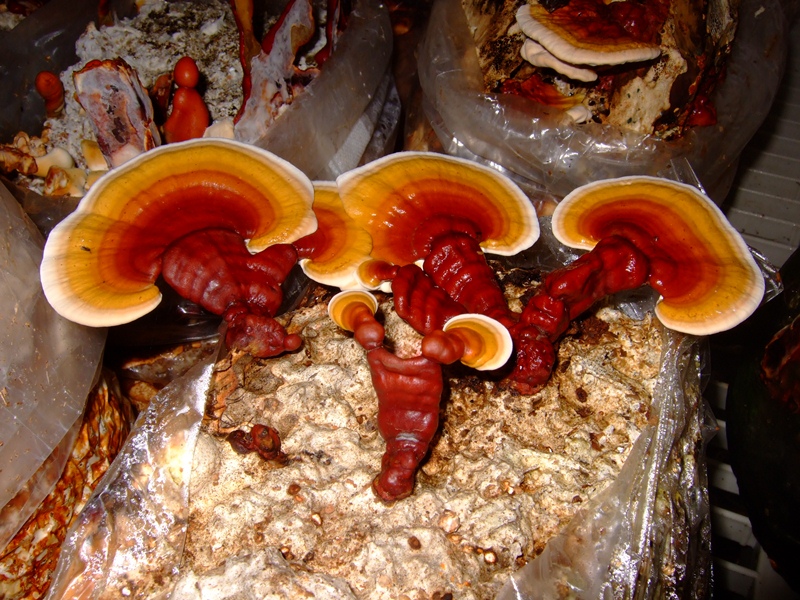
2. Reishi Mushroom (Ganoderma lucidum)
Known in traditional Chinese medicine as the “mushroom of immortality,” Reishi has been used for centuries to enhance vitality and immune function. Modern research focuses on its complex polysaccharides (like beta-glucans) and triterpenes as potential immunomodulatory agents.
Mechanism of Action
Reishi is considered an adaptogen and a biological response modifier. Studies suggest its compounds may help modulate the immune system by enhancing the activity of natural killer cells, T-cells, and macrophages. According to a review in the Cochrane Database of Systematic Reviews, some clinical trial data suggests that patients who took Reishi alongside their conventional treatment responded more positively compared to chemotherapy or radiotherapy alone. Nevertheless, the evidence is not yet strong enough to recommend it as a standalone treatment.
Administration Protocol and Safety Limits
| Formulation | Dried powder, standardized extracts in capsules, or tinctures. Ensure the product is from a reputable source to avoid contamination. |
| Maximum Daily Dose | Varies by formulation. Typical doses range from 1.5 to 9 grams of dried mushroom powder per day. Follow product instructions or a practitioner’s advice. |
| Administration | Can be taken with or without food. Hot water extraction (as in a tea) is a traditional method to release the active polysaccharides. |
| Duration | Use for up to 3-6 months, followed by a break. Consult your oncologist for guidance on use during treatment cycles. |
Contraindications and Precautions
- Drug Interactions: May interact with anticoagulants, antiplatelet drugs, and blood pressure medications. Use with caution if you are on immunosuppressive therapy.
- Medical Conditions: Avoid if you have a bleeding disorder or are scheduled for surgery.
- Side Effects: Some people may experience dry mouth, dizziness, or digestive upset.
3. Garlic (Allium sativum)
Garlic’s use as a medicinal agent dates back thousands of years. Its health-promoting properties are primarily attributed to its rich content of organosulfur compounds, such as allicin, which is formed when a garlic clove is crushed or chopped.
Mechanism of Action
Preclinical research suggests that garlic’s active compounds may offer protective effects through several mechanisms, including inducing apoptosis (programmed cell death) in cancer cells and inhibiting cell proliferation. The National Cancer Institute (NCI) acknowledges population studies that link higher garlic consumption with a reduced risk of certain cancers, like stomach and colorectal. However, these are observational findings, and clinical trials on garlic as a cancer treatment are lacking.
Administration Protocol and Safety Limits
| Formulation | Fresh raw garlic is most potent. Aged garlic extract is an alternative with fewer side effects. |
| Maximum Daily Dose | As a dietary component, 1-2 cloves per day is generally considered safe. Supplemental doses should be discussed with a healthcare provider. |
| Administration | For maximum allicin release, crush or chop garlic and let it sit for 10-15 minutes before cooking or consuming. |
Contraindications and Precautions
- Drug Interactions: Garlic has blood-thinning properties and can increase the risk of bleeding when taken with anticoagulants (warfarin) or antiplatelet drugs. It may also interact with certain HIV medications and other drugs metabolized by the liver.
- Surgery: Discontinue high-dose garlic supplements at least two weeks before scheduled surgery.
Therapeutic Alternatives
If the botanicals above are not suitable, other options with supportive research exist. Always discuss these with your oncologist.
- Green Tea (Camellia sinensis): Rich in polyphenols called catechins, particularly epigallocatechin-3-gallate (EGCG). Preclinical studies suggest EGCG has potent antioxidant properties. However, high-dose extracts can pose a risk of liver toxicity and may interact with certain drugs.
- Astragalus (Astragalus membranaceus): A foundational herb in traditional Chinese medicine used to support the immune system. Some preliminary studies suggest it may help reduce the immunosuppressive side effects of chemotherapy.
- Ginger (Zingiber officinale): Widely recognized and studied for its effectiveness in managing nausea and vomiting, common side effects of chemotherapy. It is often recommended by oncology centers as a supportive measure.
Recent Medical Research (2020-2026)
Modern research continues to explore the precise roles of these botanicals. A 2023 study in Molecules reaffirmed curcumin’s potential to sensitize cancer cells to conventional therapies in lab settings, highlighting its promise as an adjunctive agent. Similarly, a 2023 meta-analysis on Ganoderma lucidum concluded that it shows potential for improving quality of life and modulating immune markers in cancer patients, though it called for larger, more rigorous trials.
Current Limitations: The primary gap in research is the transition from laboratory findings to large-scale human clinical trials. What works in a petri dish does not always translate to effective and safe treatment in humans. Therefore, a high level of caution is still warranted.
Specialist’s Summary
Botanicals like Turmeric, Reishi, and Garlic show promise in laboratory settings for their anti-inflammatory and immunomodulatory effects, potentially offering supportive benefits during conventional cancer treatment. However, their clinical efficacy in humans is not yet definitively proven. They are absolutely contraindicated for self-treatment and carry significant risks of interaction with chemotherapy, blood thinners, and other medications. Always prioritize consultation with your oncology team before considering any herbal supplement.
Frequently Asked Questions
1. Can these herbs cure cancer?
No. There is no scientific evidence that any herbal remedy can cure cancer. These botanicals should only be considered as potential complementary therapies to support well-being and manage side effects, under the strict supervision of a medical professional.
2. Is it safe to take these herbs with chemotherapy?
Not always. Many herbs can interfere with how chemotherapy drugs are metabolized, potentially making them less effective or more toxic. For example, some antioxidants can interfere with treatments that rely on oxidative stress to kill cancer cells. You must get approval from your oncologist.
3. How do I choose a high-quality supplement?
Look for products from reputable manufacturers that follow Good Manufacturing Practices (GMP). Third-party certifications from organizations like NSF International, USP, or ConsumerLab.com can provide an additional layer of assurance regarding product quality and purity.
4. Are these herbs safe for all cancer patients?
No. Safety depends on the type of cancer, the specific treatment regimen, existing health conditions (like liver or kidney disease), and other medications being taken. For instance, herbs with estrogenic activity may be harmful to patients with hormone-sensitive cancers like breast or prostate cancer.
Sources and References
- Giordano, A., & Tommonaro, G. (2019). Curcumin and Cancer. Nutrients, 11(10), 2376.
- Jin, X., Ruiz Beguerie, J., Sze, D. M., & Chan, G. C. (2016). Ganoderma lucidum (Reishi mushroom) for cancer treatment. Cochrane Database of Systematic Reviews.
- National Cancer Institute. (2021). Garlic and Cancer Prevention.
- Memorial Sloan Kettering Cancer Center (MSKCC). About Herbs, Botanicals & Other Products database.
⚠️ Important Medical Information
This article is for educational and informational purposes only and is not intended as medical advice, diagnosis, or treatment. The information provided about these botanicals is based on traditional use and scientific research, which is often preliminary and evolving.
Before using any herbal product during cancer care:
- Consult your oncologist and a qualified healthcare provider. This is non-negotiable, as interactions can be severe.
- Do not use as a substitute for prescribed medications or professional medical treatment such as chemotherapy, radiation, or surgery.
- Individual results may vary, and safety is not guaranteed.
- Monitor for adverse reactions and discontinue use immediately if negative symptoms occur, and inform your doctor.