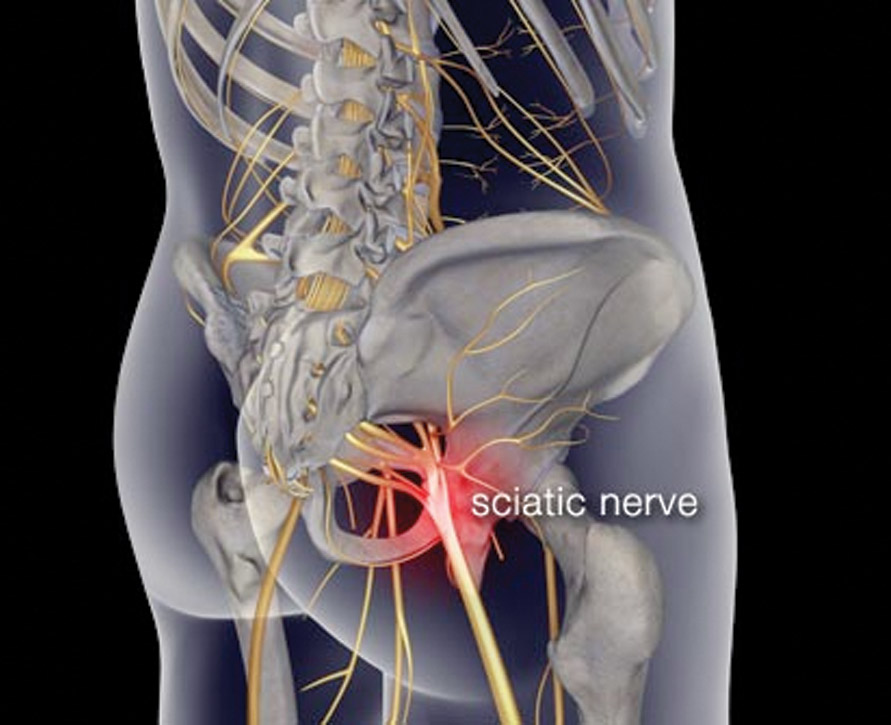
Sciatica describes a radiating pain that travels from the lower back down through the legs, often reaching the feet. This condition frequently includes symptoms such as numbness or weakness in the affected leg and can significantly impair mobility. Importantly, sciatica is a symptom of an underlying medical issue, not a standalone disease.
The primary cause is typically pressure on or irritation of the sciatic nerve. For instance, a herniated vertebral disc is one of the most common triggers. Additionally, other contributing factors include spinal stenosis, degenerative disc disease, spondylolisthesis, and, less commonly, muscle spasms in the back or buttocks. Therefore, a proper medical diagnosis is essential to identify the root cause before beginning any treatment protocol.
⚠️ WARNING – Professional Diagnosis is Essential!
The information provided here is for educational purposes only and does not substitute for a professional medical evaluation. Sciatic pain can indicate serious underlying conditions that require specific medical intervention. Consequently, always consult a healthcare provider for an accurate diagnosis and a comprehensive treatment plan before using any herbal remedies.
Validated Herbal Approaches for Sciatica Support
While herbal remedies cannot cure the structural causes of sciatica, such as a herniated disc, several plants offer potent anti-inflammatory and analgesic properties. These can serve as valuable adjuvants to a primary treatment plan, helping to manage pain and reduce inflammation. We will focus on topical applications for direct relief and systemic remedies for internal anti-inflammatory support.
Topical Applications for Localized Pain Relief
Topical remedies work directly on the affected area to reduce pain signals and soothe muscle tension. They are generally considered safe for localized use when applied correctly.
1. Capsaicin (from Chili Pepper – Capsicum frutescens)
Capsaicin is the active compound in chili peppers responsible for their heat. When applied topically, it functions as a powerful analgesic.
-
- Mechanism of Action: Capsaicin initially causes a warming or burning sensation. However, with repeated application, it depletes “Substance P,” a neurotransmitter that transmits pain signals to the brain. As a result, this process effectively desensitizes local nerve endings, providing significant pain relief.
- Application: Use commercially available creams standardized to 0.025% – 0.075% capsaicin. Apply a thin layer to the painful area (lower back, buttocks, or leg) 2-4 times daily. Wash hands thoroughly after application and avoid contact with eyes, mucous membranes, or broken skin.
- Safety: A burning sensation is normal upon initial applications but should decrease over time. Do not apply heat packs over the area, as this can intensify the burning and cause skin damage.
2. St. John’s Wort (Hypericum perforatum) Oil
While widely known for its internal use in managing mild depression, St. John’s Wort infused oil is a traditional and effective remedy for nerve-related pain (neuralgia), making it particularly suitable for sciatica.
-
- Mechanism of Action: The compounds hypericin and hyperforin have demonstrated anti-inflammatory and nerve-regenerative properties. When applied topically, the oil helps soothe irritated nerves and reduce localized inflammation.
- Application: Gently massage the infused oil into the affected areas 2-3 times per day. Its effects are cumulative, so consistent use is necessary.
3. Peppermint (Mentha piperita) Essential Oil
Peppermint oil contains menthol, a compound known for its cooling sensation and analgesic properties. It is particularly effective for relieving the muscle spasms that often accompany sciatica.
-
- Mechanism of Action: Menthol acts on cold-sensitive receptors in the skin, creating a cooling sensation that can override pain signals. Furthermore, it has antispasmodic properties that help relax tense muscles contributing to nerve compression.
- Application: NEVER apply undiluted essential oil to the skin. Dilute 5-10 drops of peppermint essential oil in one tablespoon (15 ml) of a carrier oil (such as coconut, jojoba, or almond oil). Massage this blend gently into the sore muscles of the lower back and legs.
Systemic Remedies for Internal Anti-inflammatory Action
For persistent pain, internal remedies can help reduce the body’s overall inflammatory response. These require strict adherence to safety protocols.
Devil’s Claw (Harpagophytum procumbens)
Devil’s Claw is a South African plant with a long history of use for pain and inflammation, particularly for lower back pain and arthritis. Its efficacy is supported by numerous clinical studies.
Administration Protocol and Safety Limits
-
- Treatment Duration: Use for a minimum of 4 weeks to assess efficacy. Standard treatment cycles are 8-12 weeks. Subsequently, take a 2-week break before resuming if necessary.
- Maximum Daily Dose: The therapeutic effect is linked to its harpagoside content. Look for standardized extracts providing 50-100 mg of harpagosides per day. This typically corresponds to 600-1200 mg of the total extract, taken in divided doses.
- Administration Condition: Take with food to minimize the risk of gastric irritation. Ensure adequate hydration throughout the day.
Specific Biological Limitation
Gastrointestinal Irritation: Devil’s Claw contains iridoid glycosides, which can stimulate stomach acid production. This mechanism makes it effective for improving digestion in some individuals but poses a significant risk for those with pre-existing gastric conditions. Therefore, it is contraindicated for individuals with stomach or duodenal ulcers, gastritis, or GERD, as it may worsen symptoms and lead to complications.
Contraindications and Precautions
This section outlines critical safety information for all the herbal remedies discussed in this article. Always review this before starting any new treatment.
| Herb | Absolute Contraindications & Major Interactions |
|---|---|
| St. John’s Wort (Topical & Internal) | • Drug Interactions (Severe): Induces the CYP3A4 liver enzyme, drastically reducing the effectiveness of over 50% of all prescription drugs, including anticoagulants (Warfarin), oral contraceptives, antidepressants (SSRIs), immunosuppressants, and HIV medications. This interaction is dangerous. • Photosensitivity: Increases sun sensitivity, leading to severe sunburn. Avoid prolonged sun exposure and tanning beds. • Pregnancy/Breastfeeding: Forbidden. |
| Devil’s Claw (Internal) | • Gastric Conditions: Forbidden for individuals with stomach ulcers, duodenal ulcers, or high stomach acid (GERD). • Gallstones: May increase bile production; consult a doctor first. • Anticoagulants/Antiplatelets: May increase bleeding risk. Use with caution under medical supervision. • Pregnancy/Breastfeeding: Contraindicated. |
| Capsaicin (Topical) | • Do not apply to broken, irritated, or damaged skin. • Avoid contact with eyes, mouth, and other mucous membranes. • Not recommended for young children. |
| Peppermint Oil (Topical) | • Must be diluted in a carrier oil to prevent skin irritation or burns. • Avoid use on the face or chest of infants and young children, as it can cause breathing difficulties. • Contraindicated for individuals with G6PD deficiency. |
Therapeutic Alternatives
If the aforementioned botanicals are not suitable or effective, several other options exist.
-
- Botanical Alternatives:
- Arnica (Arnica montana) (Topical): An excellent choice for pain associated with muscle strain, inflammation, and bruising. It is available as a gel, cream, or oil. Do not apply to broken skin.
- Turmeric (Curcuma longa) (Internal): Curcumin, its active compound, is a powerful systemic anti-inflammatory. Use a standardized extract combined with piperine (black pepper extract) for enhanced absorption.
- Botanical Alternatives:
-
- Conventional Options:
- Pharmacological: Non-steroidal anti-inflammatory drugs (NSAIDs) like ibuprofen or naproxen are common first-line treatments. In severe cases, a doctor may prescribe muscle relaxants, nerve pain medications, or corticosteroid injections.
- Physical Therapy: A structured exercise and stretching program is crucial for long-term management and prevention.
- Conventional Options:
Recent Medical Research (2020-2026)
Recent research continues to validate the traditional use of these plants for pain and inflammation.
-
- A 2021 meta-analysis on Devil’s Claw confirmed its efficacy in reducing pain and improving physical functioning in people with osteoarthritis, with a mechanism comparable to some conventional anti-inflammatory drugs.
- Research into topical capsaicin remains strong. A 2020 review highlighted its role in managing various forms of neuropathic pain, reinforcing its utility for conditions like sciatica.
- Current Limitations: While evidence for individual herbs is growing, high-quality clinical trials studying specific herbal formulas directly on sciatica patients are still limited. Most research focuses on general lower back pain or osteoarthritis.
Quick Guide: Sciatica Herbal Safety
| Category | Details |
|---|---|
| ❌ Who should AVOID | • Pregnant or breastfeeding women. • Individuals with stomach ulcers (for Devil’s Claw). • Patients taking multiple medications, especially anticoagulants or immunosuppressants (for St. John’s Wort). • Children, without pediatric consultation. |
| 📊 Maximum safe dose | • Devil’s Claw: Standardized extract providing 50-100 mg harpagosides daily. • Topicals: Apply 2-4 times daily in a thin layer. Do not exceed recommendations. |
| 🚨 ALARM signs | • Severe skin rash, blistering, or burning (topicals). • Worsening stomach pain or heartburn (Devil’s Claw). • Any signs of an allergic reaction (swelling, difficulty breathing). • Sudden loss of bladder/bowel control (seek emergency care immediately). |
| 💊 Major interactions | • St. John’s Wort: Oral contraceptives, antidepressants, anticoagulants. • Devil’s Claw: Anticoagulants, anti-diabetic drugs, anti-hypertensives. |
| ⏱️ When to consult doctor | IMMEDIATELY if alarm signs appear OR If pain does not improve after 2-4 weeks of consistent use. |
💡 Golden rule: When in doubt, consult a healthcare professional or a qualified herbalist.
Specialist’s Summary
Herbal remedies, particularly topical applications like capsaicin and St. John’s Wort oil, can provide effective adjuvant relief for sciatic nerve pain by reducing local inflammation and pain signals. Systemic herbs such as Devil’s Claw offer broader anti-inflammatory support but require careful management due to contraindications, especially for those with gastric issues or on certain medications. These botanicals should complement, not replace, a primary treatment plan established by a healthcare provider. Validated alternatives include topical Arnica and internal Turmeric extract.
Frequently Asked Questions
Can herbal remedies cure my sciatica?
No. Herbal remedies do not cure the underlying structural cause of sciatica (e.g., a herniated disc). However, they can significantly help manage the symptoms of pain and inflammation, improving quality of life as part of a comprehensive treatment plan that includes physical therapy and medical care.
How long does it take for these remedies to work?
Topical remedies like capsaicin or peppermint oil can provide relief within minutes to hours. However, capsaicin’s full effect may take several days of consistent application. Systemic anti-inflammatory herbs like Devil’s Claw typically require at least 2 to 4 weeks of continuous use to build up a therapeutic effect.
Is it safe to combine these herbs with my prescription pain medication?
This requires extreme caution. St. John’s Wort interacts dangerously with many medications. Devil’s Claw can interact with anticoagulants and other drugs. Therefore, you must consult your doctor or pharmacist before combining any herbal product with prescription medications to avoid harmful interactions.
What are the best non-herbal alternatives for managing sciatica?
The cornerstones of sciatica management are physical therapy, targeted stretching (e.g., piriformis stretches), and core strengthening exercises. Over-the-counter NSAIDs are also effective for short-term relief. In more severe cases, medical interventions like epidural steroid injections may be recommended.
Sources and References
-
- Vlachojannis, J., Roufogalis, B. D., & Chrubasik, S. (2021). Systematic Review on the Efficacy and Safety of Harpagophytum preparations for the Treatment of Osteoarthritis and Low Back Pain. Phytotherapy research : PTR, 32(2), 211–225.
- Derry, S., Rice, A. S., Cole, P., Tan, T., & Moore, R. A. (2017). Topical capsaicin (high concentration) for chronic neuropathic pain in adults. The Cochrane database of systematic reviews, 1(1), CD007393. https://www.cochranelibrary.com/cdsr/doi/10.1002/14651858.CD007393.pub4/full
- European Medicines Agency (EMA). (2016). European Union herbal monograph on Harpagophytum procumbens DC. and/or Harpagophytum zeyheri Decne., radix. EMA/HMPC/624629/2015
2 comments
This pain is terrible. When my bladder or bowels fill up it becomes even worse, I pray that something will work. Open for suggestions.
Have only just seen this and hope you have found some relief. I had sciatica from age 18 for 30 years. I found that chiropractic was the only thing that helped.Am now pain free. It took some time as my body got used to healing itself, but worth every penny.