European Mistletoe (*Viscum album*) has been a cornerstone of traditional European herbalism for centuries, particularly for its role in supporting cardiovascular health. Historically, practitioners have used it to help stabilize blood pressure and ease nervous tension. However, this potent plant requires careful and informed use due to its potential toxicity.
This article provides an evidence-based overview of Mistletoe’s traditional uses for heart and circulation, focusing on proper preparation, dosage, and critical safety protocols, as guided by modern phytotherapy principles.

Understanding Mistletoe: Plant and Preparation
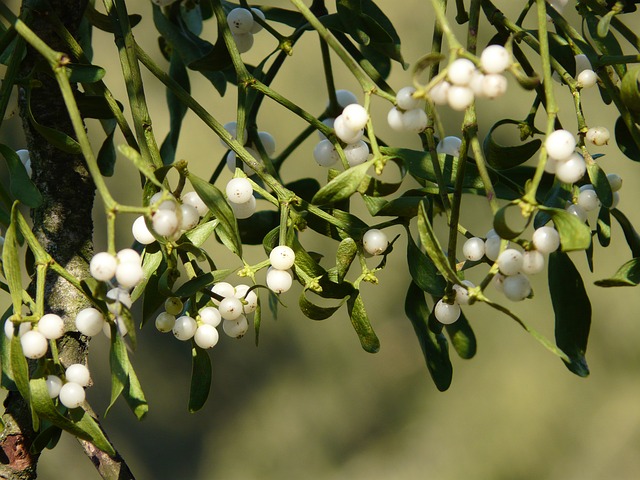
Mistletoe is a semi-parasitic plant that grows on the branches of various host trees. According to traditional herbal medicine, the therapeutic properties can vary depending on the host tree, with mistletoe from oak, apple, and pine trees being highly valued. For therapeutic use, only the leaves and young stems are harvested, typically in spring or autumn.
Crucially, the white berries of the Mistletoe plant are toxic and must never be used for internal consumption.
Potential Cardiovascular Benefits of Mistletoe
While extensive modern clinical trials on Mistletoe tea are limited, its use is supported by traditional application and official monographs, such as Germany’s Commission E, for specific conditions.
1. Blood Pressure Regulation
Mistletoe’s most recognized traditional use is for supporting blood pressure balance. It is considered an “amphoteric” remedy, meaning it has been traditionally observed to help normalize blood pressure, whether it is mildly elevated or low. For instance, research suggests that certain compounds in mistletoe may have hypotensive effects, potentially helping to relax blood vessels. Therefore, it has been traditionally used to alleviate symptoms associated with mild hypertension, such as dizziness or headaches.
2. Circulatory and Cardiac Support
Furthermore, by helping to stabilize blood pressure, Mistletoe may contribute to improved overall circulatory function. Traditional medicine practitioners use it to support cardiac activity, particularly when nervous tension or stress contributes to heart palpitations or an irregular pulse. Its calming properties are thought to reduce the strain on the cardiovascular system caused by chronic stress.
3. Calming Effects on the Nervous System
In addition to its cardiovascular actions, Mistletoe has a traditional reputation as a nervine tonic. It has been used to soothe nervous irritability, restlessness, and tension-related symptoms. This calming effect is particularly beneficial when these conditions are linked to cardiovascular complaints, creating a cycle of stress and high blood pressure.
⚠️ WARNING – High Toxicity Risk and Need for Caution!
Mistletoe is not a simple kitchen herb; it is a potent medicinal plant with a narrow therapeutic window. All parts of the American Mistletoe (Phoradendron leucarpum) are considered highly toxic. This guide refers exclusively to European Mistletoe (Viscum album).
- Never consume Mistletoe berries. They are poisonous and can cause severe gastrointestinal distress, slowed heart rate, and other serious symptoms.
- Improper preparation can be dangerous. Hot water brewing extracts toxic proteins (viscotoxins) that are less soluble in cold water.
- Never self-diagnose or self-treat serious conditions like hypertension with Mistletoe. Always work with a qualified healthcare provider.
Administration Protocol and Safety Limits
Correct preparation and administration are essential for the safe use of Mistletoe tea. The traditional method is a cold maceration, which is designed to extract the beneficial compounds while minimizing the extraction of toxic ones.
How to Prepare Mistletoe Cold Infusion
- Place one level teaspoon (approx. 2.5 grams) of dried Mistletoe leaves and stems into a glass jar.
- Pour one cup (250 ml) of cold water over the herb.
- Cover and let it steep at room temperature for 8-12 hours (or overnight).
- In the morning, strain the infusion. You may gently warm it to a comfortable drinking temperature, but do not boil it.
| Protocol | Specification |
|---|---|
| Maximum Daily Dose | 1 to 2 cups (250-500 ml) of the cold infusion per day, sipped throughout the day. |
| Treatment Duration | Up to 3 weeks of continuous use. |
| Mandatory Break | A minimum of 1-2 weeks break is required between treatment cycles. |
| Administration | Best consumed between meals. Sip slowly rather than drinking all at once. |
Specific Biological Limitation
Mistletoe contains potent bioactive compounds, including lectins and viscotoxins. While these substances are responsible for some of its therapeutic effects (and are studied in oncology for their cytotoxic properties), they are also the source of its toxicity. The cold maceration method is a harm-reduction strategy, but it does not eliminate all risks. Consequently, individuals with protein hypersensitivities or compromised immune systems should avoid Mistletoe, as these compounds can trigger unpredictable reactions.
Contraindications and Precautions
Mistletoe is not suitable for everyone. Adhering to the following contraindications is critical for safety.
- Absolute Contraindications: Do not use Mistletoe if you are pregnant, breastfeeding, or have known allergies to the plant. It is also contraindicated in cases of chronic infections (like tuberculosis) and high fever.
- Vulnerable Populations: Not recommended for children under 18 due to a lack of safety data. The elderly should use it only under professional supervision.
- Major Drug Interactions:
- Antihypertensive Medications: Combining Mistletoe with blood pressure-lowering drugs may cause an excessive drop in blood pressure (hypotension).
- Immunosuppressants & Immunostimulants: Mistletoe can modulate the immune system and may interfere with these medications.
- Cardiac Glycosides (e.g., Digoxin): There is a theoretical risk of interaction; avoid concurrent use.
- When to Stop Immediately: Discontinue use and consult a doctor if you experience nausea, vomiting, diarrhea, a sudden drop in blood pressure, or a slowed heart rate.
Therapeutic Alternatives
If Mistletoe is not appropriate for you, several other well-researched botanicals offer cardiovascular support with a better safety profile.
- Hawthorn (Crataegus spp.): Considered one of the safest and most effective herbs for general heart health. Hawthorn is a cardiotonic that helps improve heart muscle function and coronary blood flow. It is an excellent choice for long-term heart support.
- Olive Leaf Extract (Olea europaea): Rich in oleuropein, this extract has been studied for its ability to help lower mild to moderate high blood pressure. It works differently from Mistletoe, primarily through vasodilation.
- Hibiscus Tea (Hibiscus sabdariffa): Clinical trials have shown that daily consumption of hibiscus tea can significantly lower systolic and diastolic blood pressure in individuals with prehypertension and mild hypertension.
Recent Medical Research (2020-2026)
Most contemporary research on Viscum album focuses on its use as a subcutaneous injection in complementary cancer therapy, where purified extracts are used for their immunomodulatory effects. However, high-quality clinical trials on the traditional oral use of Mistletoe tea for hypertension are scarce in recent years.
The current scientific verdict relies heavily on historical use and pharmacopoeial monographs like the German Commission E. Therefore, while its traditional role is acknowledged, the lack of modern, large-scale human trials means its efficacy and safety for cardiovascular health are not as robustly established as alternatives like Hawthorn or Hibiscus. More research is needed to validate its traditional applications and define precise, safe dosages.
Specialist’s Summary
European Mistletoe (*Viscum album*) is a traditional remedy used as a cold-macerated tea to support mild hypertension and associated nervous tension. Its use is significantly limited by a narrow therapeutic window and toxicity risk, particularly from its berries or improper hot-water brewing. Consequently, it is contraindicated during pregnancy and interacts with cardiovascular and immune-modulating medications. Safer, well-researched alternatives include Hawthorn for cardiac support and Olive Leaf Extract for blood pressure management.
Frequently Asked Questions
Is Mistletoe tea safe to drink?
It can be safe only when specific conditions are met: using only the European species (*Viscum album*), excluding the toxic berries, preparing it as a cold infusion, adhering to strict dosage and duration limits, and using it under the guidance of a qualified healthcare professional. It is not a casual beverage.
Can Mistletoe tea replace my blood pressure medication?
Absolutely not. Mistletoe should never be used as a substitute for prescribed medications. Abruptly stopping your medication can be dangerous. Always consult your doctor before considering any herbal supplement for a diagnosed medical condition like hypertension.
What is the difference between European and American Mistletoe?
They are different botanical species. European Mistletoe (*Viscum album*) is the species used in traditional European phytotherapy. American Mistletoe (*Phoradendron* species) is generally considered more toxic and is not used therapeutically in the same way. Never substitute one for the other.
Sources and References
- ESCOP (2003). ESCOP Monographs: The Scientific Foundation for Herbal Medicinal Products. Visci Herba (Mistletoe). Thieme.
- Blumenthal, M. (Ed.). (1998). The Complete German Commission E Monographs: Therapeutic Guide to Herbal Medicines. American Botanical Council.
- Mills, S., & Bone, K. (2005). The Essential Guide to Herbal Safety. Churchill Livingstone.
⚠️ Important Medical Information
This article is for educational and informational purposes only and is not intended as medical advice, diagnosis, or treatment. The information provided about Mistletoe (Viscum album) is based on traditional use, preliminary research, and available scientific evidence, which may be limited.
Before using Mistletoe:
- Consult a qualified healthcare provider, especially if you are pregnant, breastfeeding, taking medications, or have existing health conditions like hypertension or immune disorders.
- Do not use as a substitute for prescribed medications or professional medical treatment.
- Individual results may vary – what works for one person may not work for another.
- Monitor for adverse reactions and discontinue use if negative symptoms occur.
Regulatory status: Mistletoe is considered a traditional remedy and has not been evaluated by the FDA for treating, curing, or preventing any disease.