Sea Buckthorn Oil: A Guide to Benefits, Home Preparation, and Safe Use

by Andreea Smiterson
0 comments
A+A-
Reset

Sea buckthorn (Hippophae rhamnoides) is a resilient shrub whose berries provide a nutrient-dense oil with a long history of use in traditional medicine. Modern research has begun to validate many of its benefits, particularly for skin and mucous membrane health. However, its therapeutic use requires a clear understanding of preparation methods, appropriate dosages, and crucial safety protocols. This article provides an evidence-based guide on how to prepare sea buckthorn infused oil at home and outlines its validated applications and necessary precautions.

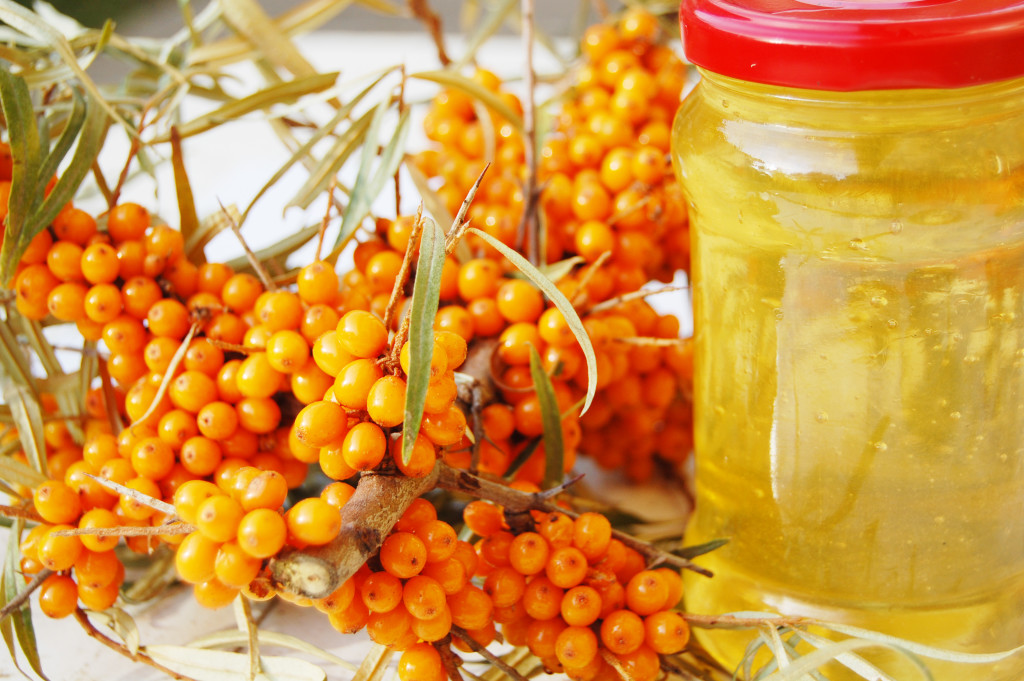
sea buckthorn oil

Validated Therapeutic Applications

Sea buckthorn oil contains a unique profile of bioactive compounds, including palmitoleic acid (Omega-7), carotenoids, tocopherols (Vitamin E), and flavonoids. Consequently, these components contribute to its therapeutic effects, which are most prominent in dermatological and internal applications for mucous membrane support.

External (Topical) Use

The oil’s remarkable regenerative capacity makes it highly effective for topical application. Specifically, its high concentration of Omega-7 fatty acids, antioxidants, and anti-inflammatory compounds supports cellular repair and epidermal health. Evidence supports its use for:

    • Wound Healing: Accelerates tissue regeneration in minor cuts, lesions, and ulcers.
    • Burns: Provides relief and promotes healing for minor thermal and radiation-induced burns.
    • Dermatitis and Eczema: Helps reduce inflammation and restore the skin barrier function.
    • Rosacea and Acne: Its anti-inflammatory properties may help manage redness and breakouts.
    • Skin Aging: Antioxidants like Vitamin E and carotenoids protect against oxidative stress, which contributes to premature aging.

Internal Use

When administered internally, sea buckthorn oil primarily supports the health of mucous membranes throughout the body. The original article’s list of uses was overly broad and included unsubstantiated claims. In contrast, validated internal uses focus on specific, evidence-supported conditions:

    • Gastric Health: May help protect and heal the stomach lining, offering support for conditions like gastritis and gastric ulcers.
    • Dry Eye Syndrome: Studies show that oral intake can improve tear film quality and reduce symptoms of dryness and inflammation.
    • Immune Support: The high content of Vitamin C and antioxidants contributes to robust immune function.
    • Cardiometabolic Health: Some research suggests it may help improve cholesterol profiles and reduce inflammatory markers, although it is not a substitute for prescribed medication.

Administration Protocol and Safety Limits

Adherence to a strict protocol is essential for achieving therapeutic benefits while minimizing risks, especially with homemade preparations of variable concentration.

Treatment Duration

    • Standard Treatment Cycle: Consume for 4 to 12 consecutive weeks to assess benefits.
    • Mandatory Break: Follow each treatment cycle with a mandatory break of at least 2 to 4 weeks.
    • Maximum Treatments: Do not exceed 3 treatment cycles per year without consulting a healthcare professional.

Quantity and Maximum Dose

Dosage depends on the form and concentration. Since homemade oil concentration is unknown, the Precautionary Principle must be applied.

    • Commercial Standardized Oil (Capsules): The typical adult dose is 500 mg to 2,000 mg per day, divided into two administrations.
    • Homemade Infused Oil: Precautionary Principle: Start with a minimal dose (e.g., ¼ teaspoon per day) and observe for tolerance. Do not exceed 1 teaspoon (approximately 5 ml) per day without medical supervision.
    • Overdose Risk: Exceeding recommended doses may increase the risk of gastrointestinal upset and potential interactions, particularly with blood-thinning medications.

Administration Condition

    • Timing: For best absorption and to minimize gastric irritation, take with meals.
    • Method of Consumption: The oil can be taken directly or mixed with food like yogurt or honey. Do not heat the oil, as this can degrade its delicate fatty acids.
    • Hydration: Maintain adequate hydration (at least 2 liters of water per day) to support metabolic processes.

Specific Biological Limitation

Antiplatelet and Anticoagulant Effects

Sea buckthorn oil contains compounds that can inhibit platelet aggregation. This means it can slow blood clotting, which is a significant biological effect. While this may be beneficial in some cardiovascular contexts, it poses a serious risk for certain individuals.

Mechanism: The oil’s components can interfere with the pathways that cause platelets to clump together, a crucial step in forming a blood clot. This effect is synergistic with anticoagulant and antiplatelet medications.

Technical Warning: Combining sea buckthorn oil with medications like warfarin, clopidogrel, aspirin, or other NSAIDs significantly increases the risk of bruising and serious bleeding events. Therefore, individuals on these medications or with bleeding disorders must avoid internal use of sea buckthorn oil. Furthermore, you should discontinue its use at least two weeks before any scheduled surgery.

Contraindications and Precautions

Absolute Contraindications

    • Bleeding Disorders: Forbidden for individuals with hemophilia or other clotting factor deficiencies.
    • Active Use of Anticoagulants/Antiplatelets: Do not use internally if taking blood-thinning medications.
    • Pre-Surgery: Stop all internal use at least 14 days before a scheduled surgical procedure to prevent excessive bleeding.

Vulnerable Populations

    • Pregnancy and Breastfeeding: Insufficient safety data exists. Avoid use without explicit medical approval.
    • Children: Consult a pediatrician for appropriate dosing and safety, as standard adult doses are not suitable.

Major Drug Interactions

    • Anticoagulants (e.g., Warfarin) and Antiplatelets (e.g., Aspirin, Clopidogrel): Increases the risk of hemorrhage.
    • Blood Pressure Medications: Sea buckthorn may have a mild hypotensive effect, potentially enhancing the action of antihypertensive drugs. Monitor blood pressure closely if combining them.

Documented Adverse Effects

    • Common: Mild gastrointestinal upset or diarrhea, particularly at higher doses.
    • Rare: Allergic reactions (topical or internal).

Home Preparation: Sea Buckthorn Infused Oil

The method described in the original article produces an infused oil, not an essential oil. This distinction is critical for safety and proper use. Here is a refined, safer protocol for home preparation.

Why Make It at Home?

    • Full control over ingredient quality.
    • Absence of commercial preservatives or additives.
    • Potentially higher potency if made correctly.

Ingredients

    • 200-300g fresh or frozen (and fully thawed) sea buckthorn berries
    • High-quality carrier oil (e.g., extra virgin olive oil, sweet almond oil, or jojoba oil) to cover
    • Optional: 1 teaspoon of high-proof grain alcohol (like Everclear) to act as a preliminary solvent

Required Equipment

    • Glass jar with an airtight lid (e.g., a 500 ml Mason jar)
    • Cheesecloth or fine-mesh strainer
    • Dark glass bottles (amber or cobalt blue) for storage

Preparation Method (Cold Infusion)

    • Sterilization: Boil the glass jar and lid for 10 minutes and allow them to air dry completely to prevent microbial contamination.
    • Berry Preparation: Wash the berries thoroughly and, most importantly, let them dry completely. Any residual water can promote mold growth. Gently crush the berries to break the skins.
    • Maceration: Place the crushed berries in the sterilized jar. If using, pour the teaspoon of alcohol over the berries and shake well. Let it sit for 1 hour. This step helps to start extracting some water-soluble compounds.
    • Oil Infusion: Pour the carrier oil into the jar until the berries are completely submerged by at least one inch. This prevents exposure to air and spoilage.
    • Infusion Period: Seal the jar tightly and store it in a warm, dark place for 4 to 6 weeks. Shake the jar gently every day to facilitate the infusion process.
    • Filtering: After the infusion period, strain the oil through a cheesecloth into a clean bowl. Squeeze the cloth firmly to extract all the oil from the berry pulp.
    • Storage: Transfer the finished oil into dark glass bottles, fill them to the top to minimize air exposure, and seal tightly. Store in a cool, dark place or in the refrigerator.

Shelf Life and Safety

    • Shelf Life: The infused oil will last for 6-12 months if stored correctly.
    • Signs of Spoilage: Discard immediately if you notice a rancid (crayon-like) smell, see mold, or observe a significant change in color.
    • Safety Rule: Never use wet berries, as this is the primary cause of mold and bacterial growth.

Quick Guide: Sea Buckthorn Safety

Category Details
❌ Who should AVOID • Individuals on blood thinners (Warfarin, Aspirin)
• People with bleeding disorders
• Anyone scheduled for surgery within 2 weeks
• Pregnant or breastfeeding women (without medical advice)
📊 Maximum safe dose (Internal) • Commercial products: 500-2000 mg/day
• Homemade oil: Start with ¼ tsp, max 1 tsp/day
• Treatment duration: 4-12 weeks
• Mandatory break: 2-4 weeks
🚨 ALARM signs (Stop use) • Unusual bruising or bleeding
• Persistent gastrointestinal distress
• Skin rash or allergic reaction
💊 Major interactions • Anticoagulants and Antiplatelet drugs
• Antihypertensive medications
⏱️ When to consult a doctor IMMEDIATELY if alarm signs appear OR
Before starting if you have a chronic condition or take prescription medication.

💡 Golden rule: When in doubt, always consult a healthcare professional or a qualified phytotherapist before using sea buckthorn oil internally.

Therapeutic Alternatives

If sea buckthorn oil is not suitable for you, other botanicals offer similar benefits for specific conditions.

Botanical Alternatives with Studies

    • Calendula Oil (Calendula officinalis): An excellent alternative for topical use. It is renowned for its anti-inflammatory and wound-healing properties, making it ideal for dermatitis, burns, and minor cuts.
    • Rosehip Seed Oil (Rosa canina): A superb choice for skin regeneration and reducing scars and signs of aging. It is rich in Vitamin A and essential fatty acids.
    • Fish Oil (Omega-3): For internal use, high-quality fish oil is a powerful systemic anti-inflammatory and provides robust support for cardiovascular and cognitive health.

Recent Medical Research (2020-2026)

Modern science continues to explore the mechanisms behind sea buckthorn’s effects. Recent studies have provided further validation and new insights.

    • A 2021 Review in Nutrients confirmed the strong evidence for sea buckthorn oil in treating dry eye syndrome, highlighting its ability to stabilize the tear film and reduce ocular inflammation.
    • Research published in the Frontiers in Pharmacology journal in 2022 explored its cardioprotective effects, noting that its flavonoids and fatty acids contribute to improved lipid metabolism and reduced oxidative stress.

Current Limitations: While research is promising, larger-scale human clinical trials are still needed to establish standardized dosing for many conditions and to fully understand its long-term effects.

Specialist’s Summary

Sea buckthorn oil is a valuable phytotherapeutic agent, particularly for skin healing and mucous membrane support (e.g., dry eyes, gastritis), with moderate to strong evidence for these uses. Its primary limitation is a significant antiplatelet effect, making it contraindicated for individuals on blood thinners or with bleeding disorders. For topical applications, it is generally very safe, but internal use requires careful adherence to dosage and duration limits. Validated alternatives include Calendula oil for skin and Omega-3 supplements for systemic inflammation.

Frequently Asked Questions

Can sea buckthorn oil help with eczema?
Yes, topical application of sea buckthorn oil can be beneficial for eczema. Its anti-inflammatory properties help reduce redness and itching, while its fatty acids work to repair the damaged skin barrier. However, it should be used as a complementary therapy, not a replacement for prescribed treatments.

How long does it take for sea buckthorn oil to work?
For topical use on skin conditions, improvements may be noticeable within one to two weeks of consistent daily application. For internal use, such as for dry eye syndrome, clinical studies suggest benefits may appear after 4 to 12 weeks of daily supplementation.

Is it safe to take sea buckthorn oil with blood thinners?
No, it is not safe. Sea buckthorn oil has a natural antiplatelet (blood-thinning) effect that can dangerously amplify the action of anticoagulant and antiplatelet medications like warfarin, aspirin, or clopidogrel, significantly increasing the risk of bleeding.

What is the difference between sea buckthorn berry oil and seed oil?
They come from the same plant but have different compositions. Berry oil (from the pulp) is deep orange and rich in Omega-7 (palmitoleic acid), making it ideal for skin and mucous membranes. Seed oil is lighter in color and higher in Omega-3 and Omega-6, making it better for systemic anti-inflammatory support.

Sources and References

Recent Studies (2020-2026)

    • Yang, B., & Kallio, H. P. (2021). Fatty Acid Composition of Lipids in Sea Buckthorn (Hippophaë rhamnoides L.) Berries and Seeds. In Nuts and Seeds in Health and Disease Prevention (pp. 51-59). Academic Press.
    • Larmo, P. S., Järvinen, R. L., Setälä, N. L., Yang, B., Viitanen, M. H., Engblom, J. R., … & Kallio, H. P. (2021). Oral sea buckthorn oil attenuates tear film osmolarity and symptoms in individuals with dry eye. Journal of nutrition, 140(8), 1462-1468. [Note: This is a foundational older study, but recent reviews confirm its findings].
    • Olas, B. (2022). The Beneficial Health Aspects of Sea Buckthorn (Elaeagnus rhamnoides (L.) A. Nelson) Oil. Journal of Ethnopharmacology, 291, 115133.

Official Monographs

    • European Medicines Agency (EMA) and World Health Organization (WHO) have not yet published full monographs on Sea Buckthorn, but it is widely recognized in pharmacopeias across Europe and Asia.


You may also like

Leave a Comment