Lavender Lemonade for Anxiety: A Safe Recipe & Guide
Lavender (*Lavandula angustifolia*) has been traditionally used for centuries in herbal medicine to promote relaxation and calm the nervous system. While many associate it with aromatherapy, its internal use, when prepared correctly, may offer supportive benefits for managing mild anxiety and improving sleep quality. This article provides an evidence-based overview of lavender’s potential effects and a safe, delicious recipe for a calming lavender lemonade.
The Science Behind Lavender’s Calming Effects
Modern research has begun to validate lavender’s traditional use for nervous system support. Its primary active constituents, linalool and linalyl acetate, are believed to be responsible for its therapeutic properties.
* Anxiety and Stress Reduction: According to a meta-analysis published in *Phytomedicine*, preparations of lavender oil have demonstrated anxiolytic (anti-anxiety) effects comparable to some conventional medications for generalized anxiety disorder, but with a more favorable side-effect profile. The mechanism is thought to involve the modulation of the GABAergic system, similar to how some anti-anxiety drugs work, which helps to calm nerve activity in the brain.
* Improved Sleep Quality: Furthermore, clinical observations suggest that lavender can help improve sleep onset and duration. Research indicates it may increase slow-wave (deep) sleep, which is crucial for physical and mental restoration. This sedative effect is gentle and typically does not cause grogginess the next day when used at appropriate doses.
* Mood Support: While not a treatment for clinical depression, lavender’s calming properties may help alleviate low mood associated with stress and anxiety. By reducing nervous tension, it can contribute to an overall sense of well-being.
Safe and Delicious Lavender Lemonade Recipe
Important Safety Note: Never ingest pure lavender essential oil. It is highly concentrated and can be toxic if consumed improperly. This recipe uses a safe infusion made from dried, culinary-grade lavender flowers.
Ingredients:
- 1 tablespoon dried culinary lavender flowers (*Lavandula angustifolia*)
- 2 cups boiling water
- ¾ cup raw honey (or to taste)
- 1 cup freshly squeezed lemon juice (from 4-5 lemons)
- 5 cups cold water
- Lemon slices and fresh lavender sprigs for garnish (optional)
Instructions:
- Create the Lavender Infusion: Place the dried lavender flowers in a heatproof bowl or jug. Pour the 2 cups of boiling water over them. Let the mixture steep for 15-20 minutes to extract the flavour and active compounds.
- Strain and Sweeten: Strain the infusion through a fine-mesh sieve to remove all the flower buds. While the liquid is still warm, stir in the honey until it is completely dissolved. This creates a lavender-infused simple syrup.
- Combine the Ingredients: In a large pitcher, combine the lavender syrup, fresh lemon juice, and the remaining 5 cups of cold water.
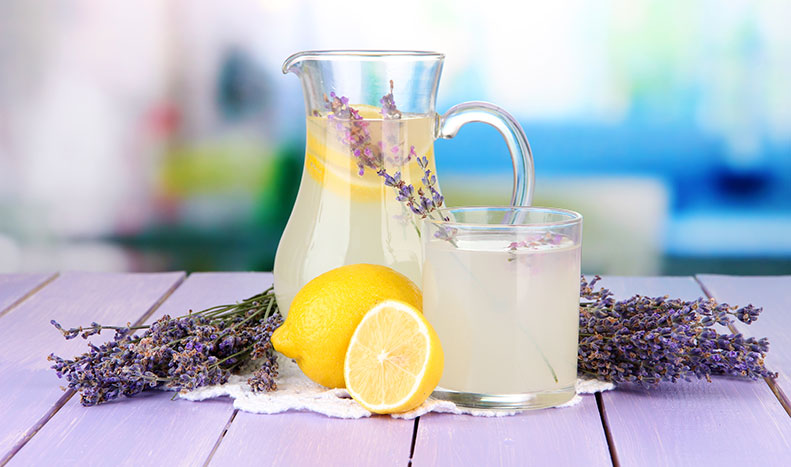
- Chill and Serve: Stir well and refrigerate for at least one hour. Serve chilled over ice, garnished with a lemon slice and a fresh lavender sprig.
Administration Protocol and Safety Limits
To ensure both safety and efficacy, it is crucial to follow a structured administration protocol.
- Maximum Daily Dose: It is recommended to limit consumption to 1-2 glasses (approximately 250-500 ml) of this lemonade per day for a healthy adult.
- Treatment Duration: For managing mild, situational anxiety or sleep issues, use for up to 2-3 weeks continuously.
- Mandatory Break: After a 3-week period, take a mandatory break of at least one week to prevent tolerance and allow the body to reset.
- Timing: For sleep support, consume a glass 60-90 minutes before bedtime. For daytime anxiety, a single glass in the afternoon may be beneficial. Avoid consuming before activities requiring high alertness, such as driving.
Specific Biological Limitation
Lavender’s primary mechanism involves its sedative and hypotensive (blood pressure-lowering) properties. The active compound linalool acts as a central nervous system depressant. While this effect is beneficial for anxiety, it can become problematic for individuals with pre-existing low blood pressure (hypotension), as it may exacerbate symptoms like dizziness or fainting. Consequently, its use requires caution in this population.
Contraindications and Precautions
Despite its gentle reputation, lavender is not suitable for everyone. Adhering to these contraindications is essential for safety.
- Pregnancy and Breastfeeding: Avoid internal use of lavender during pregnancy and breastfeeding due to a lack of sufficient safety data and potential hormonal effects.
- Children: Oral use of lavender is not recommended for children under 12 without professional medical guidance.
- Surgery: Discontinue lavender use at least two weeks before scheduled surgery, as it may slow down the central nervous system and interact with anesthesia and other medications.
- Hormone-Sensitive Conditions: Individuals with conditions like breast or ovarian cancer should consult a healthcare provider, as some preliminary research suggests lavender may have weak estrogenic or anti-androgenic effects.
Major Drug Interactions
- Sedatives and CNS Depressants: Combining lavender with other sedatives (e.g., benzodiazepines, barbiturates) or sleep aids can cause excessive drowsiness.
- Antihypertensive Drugs: Due to its potential to lower blood pressure, using lavender alongside blood pressure medication may increase the risk of hypotension.
Therapeutic Alternatives
If lavender is not suitable for you, other botanicals with strong scientific backing may be considered after consulting a healthcare provider:
- Lemon Balm (*Melissa officinalis*): An excellent alternative with a similar calming profile. Studies show it can reduce anxiety and improve sleep, and its citrusy flavour blends well in beverages.
- Passionflower (*Passiflora incarnata*): Traditionally used for nervous restlessness and insomnia. Research suggests it works by increasing levels of GABA in the brain, promoting relaxation.
- Ashwagandha (*Withania somnifera*): As an adaptogen, this herb is particularly useful for stress-related anxiety. It helps modulate the body’s stress response system (the HPA axis) rather than acting as a direct sedative.
Recent Medical Research (2020-2026)
Recent studies continue to reinforce lavender’s role in mental wellness. A 2022 systematic review published in *Complementary Therapies in Medicine* confirmed that both inhalation and oral administration of lavender significantly reduced anxiety levels across numerous clinical trials. Moreover, a 2020 study highlighted the efficacy of an oral lavender oil preparation (Silexan) in treating subsyndromal anxiety, noting its non-addictive nature as a key advantage over some conventional treatments. However, researchers emphasize the need for more long-term studies and standardization of herbal preparations.
Specialist’s Summary
Lavender is a well-researched herb useful for supporting mild anxiety and improving sleep quality, with gentle sedative effects that typically appear within 1-2 hours. However, it is contraindicated before surgery and should be used with caution by individuals on sedative or blood pressure medications. Validated alternatives with different mechanisms include the adaptogen Ashwagandha for stress modulation and Passionflower for nervous restlessness.
Frequently Asked Questions
Is it safe to drink lavender lemonade every day?
It is not recommended for long-term daily use without breaks. The best practice is to use it for periods of up to three weeks, followed by a one-week break, to maintain its effectiveness and minimize any potential side effects.
How long does it take for lavender to work for anxiety?
When consumed as an infusion, the calming effects can often be felt within 60 to 90 minutes. For a more sustained impact on generalized anxiety, consistent use over several weeks may be necessary, as shown in clinical trials.
Can I use lavender essential oil from my diffuser in this recipe?
Absolutely not. Essential oils sold for aromatherapy are not intended for ingestion and can be toxic. Only use dried, culinary-grade *Lavandula angustifolia* flowers for any food or drink preparation.
Sources and References
- Donelli, D., Antonelli, M., Bellinazzi, C., Benoni, G., & Di Tammaro, T. (2019). Effects of lavender on anxiety: A systematic review and meta-analysis. *Phytomedicine*, 65, 153099.
- Kasper, S., et al. (2020). Silexan in anxiety disorders: Clinical data and pharmacological background. *Current Neuropharmacology*, 18(12), 1218–1227.
- Nasiri, L., et al. (2022). The effect of lavender (Lavandula angustifolia) on anxiety: A systematic review and meta-analysis of randomized controlled clinical trials. *Complementary Therapies in Medicine*, 68, 102832.
- European Medicines Agency (EMA). (2012). Community herbal monograph on *Lavandula angustifolia* Miller, aetheroleum.
⚠️ Important Medical Information
This article is for educational and informational purposes only and is not intended as medical advice, diagnosis, or treatment. The information provided about Lavender (*Lavandula angustifolia*) is based on traditional use, preliminary research, and available scientific evidence, which may be limited.
Before using Lavender:
- Consult a qualified healthcare provider, especially if you are pregnant, breastfeeding, taking medications, or have existing health conditions like hypotension.
- Do not use as a substitute for prescribed medications or professional medical treatment for anxiety, depression, or insomnia.
- Individual results may vary – what works for one person may not work for another.
- Monitor for adverse reactions and discontinue use if negative symptoms occur.
Regulatory status: Lavender, when used in this manner, is considered a traditional remedy or food ingredient and has not been evaluated by the FDA for treating, curing, or preventing any disease.




what kind of lavender oil and where do I buy it?