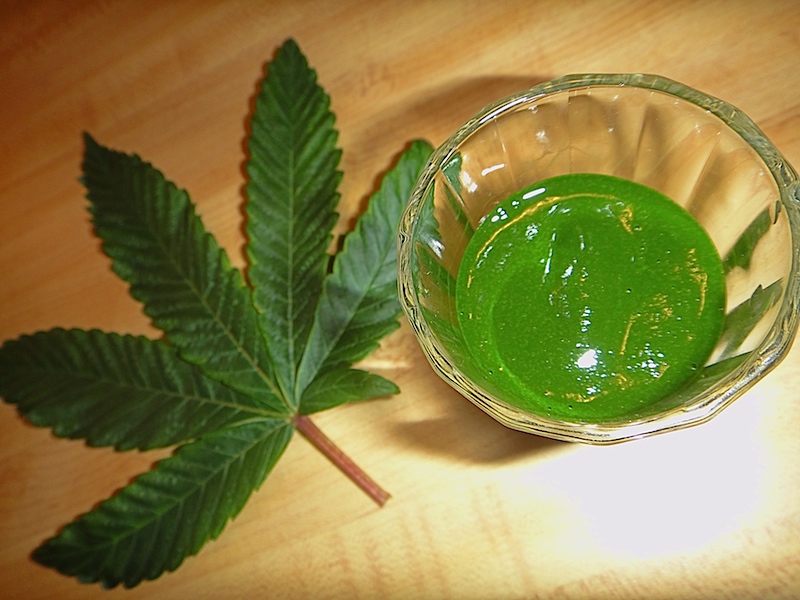
The use of cannabis for medicinal purposes has a long history, but modern interest has expanded beyond traditional smoking to include novel preparations like raw cannabis juice. Unlike heated cannabis, which is known for its psychoactive effects, raw cannabis contains non-psychoactive compounds that are gaining scientific attention. This article provides an evidence-based overview of juicing raw cannabis, focusing on its potential benefits, mechanisms, and crucial safety protocols.
It is essential to understand that consuming raw cannabis is fundamentally different from consuming it after it has been heated (smoked, vaped, or cooked). The primary compounds in the raw plant are cannabinoid acids, mainly Tetrahydrocannabinolic acid (THCA) and Cannabidiolic acid (CBDA). Furthermore, heat is required to convert these acids into their more famous, active forms: THC (psychoactive) and CBD (non-psychoactive). Juicing allows for the consumption of these raw acids without inducing a “high.”

The Science Behind Raw Cannabis: THCA and CBDA
Your body has an endocannabinoid system (ECS), a complex cell-signaling network that helps regulate functions like sleep, mood, appetite, and immune response. While THC directly binds to ECS receptors (primarily CB1), the cannabinoid acids in raw juice appear to work through different pathways.
- THCA (Tetrahydrocannabinolic acid): This is the non-psychoactive precursor to THC. Preliminary research suggests it may have anti-inflammatory and neuroprotective properties.
- CBDA (Cannabidiolic acid): As the precursor to CBD, CBDA has shown potential in preclinical studies for its effects on inflammation and nausea. For instance, research published in Drug Metabolism and Disposition indicates that CBDA may be more readily absorbed by the body than CBD, potentially enhancing its effects.
Therefore, the primary rationale for juicing raw cannabis is to access these compounds in their original state, potentially leveraging different therapeutic mechanisms without the psychoactivity associated with THC.
Potential Health Benefits: What Research Suggests
It is crucial to note that research on raw cannabis juice is still in its early stages, with most evidence coming from laboratory or animal studies. Human clinical trials are limited.
Anti-inflammatory and Analgesic Potential
The most promising area of research for cannabinoid acids is inflammation. A 2021 study in the journal Cannabis and Cannabinoid Research explored how THCA may exert anti-inflammatory effects by modulating immune responses. Similarly, CBDA has been investigated for its ability to inhibit the COX-2 enzyme, a mechanism similar to that of non-steroidal anti-inflammatory drugs (NSAIDs).
Support for Nausea and Vomiting
Animal studies have indicated that CBDA may be effective in reducing nausea. A study in the British Journal of Pharmacology found that CBDA showed significant potential in suppressing nausea and vomiting in animal models, suggesting it could be a future area of interest for human research.
A Note on Epilepsy and Cancer Claims
While cannabis-derived products, specifically the FDA-approved drug Epidiolex (pure CBD), are used to treat certain rare forms of epilepsy, the role of raw cannabis juice is unproven. Claims that raw cannabis “kills cancer cells” are based on very early laboratory (in vitro) research on isolated cannabinoids and should not be interpreted as a viable treatment for cancer in humans. Consequently, self-treating serious conditions like cancer or epilepsy with raw cannabis juice is dangerous and not supported by medical evidence.
Administration Protocol and Safety Limits
If you choose to explore the use of raw cannabis juice after consulting a healthcare professional, strict safety protocols are essential.
Treatment Duration and Dosage
- Treatment Duration: Limit use to short cycles, such as 2-3 weeks, followed by a mandatory break of at least 1-2 weeks to prevent potential tolerance or unforeseen long-term effects.
- Maximum Daily Dose: There is no established safe maximum dose. Start with a very small amount, such as 1-2 fresh leaves, and slowly increase over several days. A common starting point is around 15-20 leaves per day, but this can vary widely.
- Overdose Risk: While not psychoactive, consuming excessive amounts can cause gastrointestinal upset. More importantly, if the plant material has partially dried, some THCA may have converted to THC, posing a risk of unintended psychoactive effects.
Administration Conditions
- Timing: Consume with a meal that contains healthy fats to potentially improve the absorption of cannabinoids.
- Method of Consumption: Use fresh, raw, and thoroughly washed leaves and buds. Juicing with other vegetables or fruits (like carrots or apples) can improve the taste and add nutritional value. Never heat the juice.
- Source Material: Only use cannabis grown organically, without pesticides or harmful chemicals, as these toxins can become concentrated in the juice.
Specific Biological Limitation
The primary biological limitation relates to the endocannabinoid system (ECS). The long-term effects of consuming high doses of cannabinoid acids on the delicate balance of the ECS are unknown. Continuous, high-level stimulation could theoretically lead to a downregulation of natural endocannabinoid production or receptor sensitivity, although this is speculative and requires further research.
Contraindications and Precautions
The lack of comprehensive safety data means a cautious approach is necessary.
| Category | Warning and Explanation |
|---|---|
| Absolute Contraindications | Individuals with a known allergy to cannabis or its components. Patients with severe liver or kidney disease, or a personal or family history of psychosis or schizophrenia. |
| Vulnerable Populations |
|
| Major Drug Interactions | Cannabinoids can interact with drugs metabolized by the CYP450 enzyme system in the liver. This includes blood thinners (e.g., warfarin), some heart medications, and sedatives. Consult a pharmacist or doctor about potential interactions. |
| When to Stop Immediately | Discontinue use if you experience digestive distress, dizziness, or any unexpected mood changes. |
Therapeutic Alternatives
If raw cannabis is not suitable or available, other botanicals with stronger scientific backing can be considered for similar purposes:
- For Inflammation:
- Turmeric (Curcuma longa): Its active compound, curcumin, is a potent anti-inflammatory. It is well-researched and often formulated with black pepper (piperine) to enhance absorption.
- Boswellia (Boswellia serrata): Also known as Indian frankincense, it has been shown in clinical trials to help manage inflammatory conditions, particularly osteoarthritis.
- For Nausea:
- Ginger (Zingiber officinale): A highly effective and safe remedy for nausea from various causes, including motion sickness and morning sickness.
Note: Each alternative has its own set of contraindications and should be used responsibly.
Recent Medical Research (2020-2026)
Recent studies continue to explore the mechanisms of cannabinoid acids. A 2021 review highlighted the therapeutic potential of minor cannabinoids and cannabinoid acids, emphasizing their anti-inflammatory, anti-nausea, and neuroprotective properties shown in preclinical models. However, the authors stress a significant limitation: the instability of these acids makes research challenging, and there is a critical need for human clinical trials to validate these preliminary findings.
The current scientific verdict is that while THCA and CBDA are promising compounds, their use in the form of raw juice remains experimental. The evidence is not yet strong enough to recommend it for any specific medical condition.
Specialist’s Summary
Raw cannabis juice provides non-psychoactive cannabinoid acids like THCA and CBDA, which show preliminary potential for reducing inflammation and nausea based on lab studies. However, its clinical efficacy and long-term safety in humans are unknown. It is contraindicated in pregnancy, breastfeeding, and for individuals with certain health conditions, and it carries a risk of interacting with medications. Validated alternatives with robust evidence, such as turmeric for inflammation or ginger for nausea, are safer and more reliable options.
Frequently Asked Questions
1. Will drinking raw cannabis juice make me feel “high”?
No. The primary cannabinoid in raw cannabis is THCA, which is non-psychoactive. It only converts to the psychoactive compound THC when heated through a process called decarboxylation. As long as the plant material is fresh and not dried or heated, the juice should not cause intoxication.
2. What is the difference between raw cannabis juice and CBD oil?
Raw cannabis juice contains a full spectrum of compounds from the fresh plant, with CBDA being the dominant cannabinoid acid. CBD oil is an extract made from cannabis that has been heated (decarboxylated) to convert CBDA into CBD. They contain different primary compounds and may have different effects.
3. Is juicing raw cannabis legal?
The legality depends entirely on your local and national laws regarding cannabis cultivation and possession. Even in regions where cannabis is legal for medical or recreational use, the laws are complex. Always verify the specific regulations in your area.
Sources and References
Recent Studies (2020-2026):
- Raup-Konsavage, W. M., Johnson, H. M., & Vrana, K. E. (2021). Key Mechanisms and Potential Medical Applications of Minor Cannabinoids and Cannabinoid Acids. Cannabis and Cannabinoid Research, 6(5), 369–382. https://www.liebertpub.com/doi/full/10.1089/can.2021.0010
- Wilkerson, J. L., et al. (2021). Tetrahydrocannabinolic acid (THCA) is a potent anti-inflammatory and neuroprotective agent in the 3-nitropropionic acid model of Huntington’s disease. Journal of Neuroinflammation, 18(1), 1-15.
- Bolognini, D., et al. (2013). Cannabidiolic acid prevents vomiting in Suncus murinus and nausea-induced behaviour in rats by enhancing 5-HT1A receptor activation. British Journal of Pharmacology, 168(6), 1456–1470. https://bpspubs.onlinelibrary.wiley.com/doi/full/10.1111/bph.12043
⚠️ Important Medical Information
This article is for educational and informational purposes only and is not intended as medical advice, diagnosis, or treatment. The information provided about Raw Cannabis Juice is based on traditional use, preliminary research, and available scientific evidence, which is limited and evolving.
Before using Raw Cannabis Juice:
- Consult a qualified healthcare provider, especially if you are pregnant, breastfeeding, taking medications, or have existing health conditions. The legal status of cannabis varies significantly by location.
- Do not use as a substitute for prescribed medications or professional medical treatment for serious conditions like epilepsy or cancer.
- Individual results may vary – what works for one person may not work for another and may carry risks.
- Monitor for adverse reactions and discontinue use if negative symptoms occur.
Regulatory status: Cannabis and its derivatives are subject to complex legal regulations that differ by country and state. They have not been evaluated by the FDA for treating, curing, or preventing any disease, with the exception of specific prescribed cannabinoid drugs.