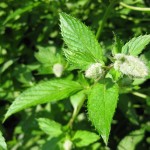
Peppermint Oil for Hair Growth: A Research-Based Guide to Safe Application
Peppermint (*Mentha x piperita*), a hybrid mint cross between watermint and spearmint, is globally recognized for its potent essential oil. Traditionally, herbalists have used it to soothe digestive complaints, alleviate tension headaches, and relieve muscle pain. More recently, scientific interest has turned towards its potential role in hair care, specifically in addressing hair thinning and promoting growth. However, its effectiveness and safety depend entirely on proper, evidence-based application.
This article provides a specialist’s perspective on using peppermint essential oil for hair health, focusing on scientific mechanisms, safety protocols, and realistic expectations, while eliminating unsupported claims.

How Peppermint Oil May Influence Hair Growth: The Scientific Mechanism
The primary active compound in peppermint oil is menthol, which is responsible for its characteristic cooling sensation and most of its therapeutic effects. For hair health, the proposed mechanism is twofold:
1. Vasodilation and Increased Blood Flow: When applied topically, menthol acts as a vasodilator, meaning it widens the blood vessels. Consequently, this action can increase blood circulation to the scalp. Improved blood flow delivers more oxygen and essential nutrients to the hair follicles, which may strengthen them and encourage a transition into the anagen (growth) phase of the hair cycle.
2. Antimicrobial and Anti-inflammatory Properties: A healthy scalp is fundamental for healthy hair growth. Peppermint oil possesses antimicrobial and antifungal properties that can help maintain a balanced scalp microbiome. Furthermore, its anti-inflammatory effects may soothe irritation and reduce conditions like dandruff, which can sometimes contribute to hair shedding.
What Does the Research Say?
Evidence for peppermint oil’s effect on hair growth comes primarily from preliminary animal studies and some small-scale human trials. It is important to interpret these findings with caution.
A foundational animal study published in *Toxicological Research* in 2014 investigated the effects of topical peppermint oil on mice. The research compared four groups: saline, jojoba oil, minoxidil (a well-known hair growth drug), and peppermint essential oil. After four weeks, the group treated with peppermint oil showed the most significant effects, with a notable increase in follicle number, follicle depth, and dermal thickness. Indeed, the study reported a 92% hair growth in the peppermint oil group, compared to 55% in the minoxidil group.
While promising, it is crucial to remember that results from animal studies do not always translate directly to humans. More recent human research is needed to validate these findings. However, these results provide a scientific basis for the vasodilatory theory and encourage further investigation.
Administration Protocol and Safety Limits
Using peppermint essential oil safely is paramount to avoid adverse reactions. **Never apply undiluted essential oil directly to the skin or scalp.**
| Aspect | Protocol |
| Method of Use | Topical application only. Must be diluted in a carrier oil. |
| Safe Dilution Ratio | Add 2-3 drops of peppermint essential oil to 1 tablespoon (15 ml) of a carrier oil (e.g., jojoba, coconut, almond, or argan oil). This creates a safe 1-2% dilution. |
| Application | Gently massage the diluted oil mixture into the scalp for 1-2 minutes. Leave it on for 15 to 30 minutes before washing your hair with shampoo. Avoid leaving it on overnight to prevent potential irritation. |
| Frequency | Maximum of 2-3 times per week. |
| Treatment Duration | Use consistently for 3 months, then take a mandatory break of 1 month to assess results and prevent skin sensitization. |
| Patch Test | Mandatory before first use. Apply a small amount of the diluted mixture to your inner forearm. Wait 24 hours to check for redness, itching, or irritation. |
Specific Biological Limitation
The potent cooling and stimulating effect of menthol is the primary biological limitation of peppermint oil. While its vasodilating properties are beneficial for circulation, this same intensity can be harmful to certain individuals.
The strong tingling sensation can easily progress to a burning feeling, redness, and contact dermatitis, especially in people with sensitive skin, eczema, psoriasis, or rosacea affecting the scalp. Therefore, for these individuals, the inflammatory risk may outweigh the potential circulatory benefit.
Contraindications and Precautions
Absolute Contraindications (Do Not Use)
- Undiluted Application: Applying pure peppermint oil can cause chemical burns and severe skin irritation.
- Ingestion: Ingesting peppermint essential oil can be toxic.
- On Broken Skin: Do not apply to cuts, sores, or an inflamed scalp.
- Near Eyes or Mucous Membranes: The vapors and oil can cause significant irritation.
- G6PD Deficiency: Individuals with this genetic disorder should avoid menthol as it can trigger hemolysis.
Vulnerable Populations
- Pregnancy and Breastfeeding: Use is not recommended due to a lack of sufficient safety data.
- Children: Absolutely contraindicated for infants and children under 6 years old. Inhaling the strong menthol vapor can cause apnea or laryngeal spasm (a life-threatening breathing obstruction).
Documented Adverse Effects
- Common: Scalp irritation, redness, a tingling or burning sensation, and contact dermatitis.
- Less Common: Headaches or dizziness due to the strong aroma, especially in sensitive individuals.
Therapeutic Alternatives
If peppermint oil is unsuitable or causes irritation, several other botanicals have stronger evidence for supporting hair growth.
1. Rosemary Essential Oil (*Rosmarinus officinalis*): This is one of the best-studied botanical alternatives. A 2015 clinical trial published in *SKINmed Journal* directly compared rosemary oil to 2% minoxidil for androgenetic alopecia. After six months, it found rosemary oil to be equally effective at increasing hair count but caused less scalp itching than minoxidil.
2. Pumpkin Seed Oil (*Cucurbita pepo*): Research suggests pumpkin seed oil may inhibit the 5-alpha reductase enzyme, which converts testosterone to DHT, a key factor in androgenetic alopecia. A 2014 study found that men who took pumpkin seed oil supplements for 24 weeks had a 40% increase in average hair count.
3. Saw Palmetto (*Serenoa repens*): Traditionally used for prostate health, Saw Palmetto also functions as a 5-alpha reductase inhibitor. It is available in topical formulations and oral supplements and is a common ingredient in natural hair loss treatments.
Recent Medical Research (2020-2026)
While large-scale human trials on peppermint oil alone are still lacking, research into topical botanical blends continues to grow. For instance, a 2021 study in the *Journal of Cosmetic Dermatology* evaluated a topical complex containing menthol. The results indicated a significant improvement in hair density and thickness after several months of use, reinforcing the idea that menthol’s vasodilating effect contributes positively to hair health.
However, the current scientific verdict is that peppermint oil is a promising but not yet proven treatment. It should be considered an adjuvant therapy to support scalp health, not a replacement for medically approved treatments like minoxidil or finasteride for diagnosed hair loss conditions.
Specialist’s Summary
Peppermint essential oil shows potential for supporting hair growth, primarily by increasing scalp circulation through its main component, menthol. Its use is strictly limited to properly diluted topical applications and is contraindicated for children, pregnant women, and individuals with sensitive skin conditions. While preliminary evidence is encouraging, validated botanical alternatives with more robust human data, such as Rosemary essential oil, currently represent a more evidence-based choice.
Frequently Asked Questions
1. Can I apply pure peppermint oil directly to my scalp for better results?
No, absolutely not. Applying undiluted peppermint essential oil can cause severe skin irritation, chemical burns, and allergic reactions. It must always be diluted in a carrier oil, such as jojoba or coconut oil, to a safe concentration of 1-2%.
2. How long does it take to see results from using peppermint oil for hair?
Results are not immediate and vary significantly between individuals. Based on the animal study and the hair growth cycle, if it is effective for you, you might begin to notice subtle changes like reduced shedding or improved scalp health after 2-3 months of consistent use (2-3 times per week).
3. Is peppermint oil a better or more effective treatment than minoxidil?
No. Minoxidil is an FDA-approved medication with decades of extensive human clinical trials proving its efficacy for treating hair loss. Peppermint oil is an experimental natural remedy with very limited evidence, mostly from one animal study. It is not a substitute for proven medical treatments.
4. Is peppermint oil safe for children or during pregnancy?
No. Peppermint oil is contraindicated for children under 6 due to the risk of severe respiratory distress if the menthol vapors are inhaled. Its safety during pregnancy and breastfeeding has not been established, so it should be avoided.
Sources and References
1. Oh, J. Y., Park, M. A., & Kim, Y. C. (2014). Peppermint Oil Promotes Hair Growth without Toxic Signs. *Toxicological Research*, 30(4), 297–304. https://www.ncbi.nlm.nih.gov/pmc/articles/PMC4289931/
2. Panahi, Y., Taghizadeh, M., Marzony, E. T., & Sahebkar, A. (2015). Rosemary oil vs minoxidil 2% for the treatment of androgenetic alopecia: a randomized comparative trial. *SKINmed*, 13(1), 15–21.
3. Dháriwala, M. Y., & Ravikumar, P. (2021). An overview of herbal alternatives in androgenetic alopecia. *Journal of Cosmetic Dermatology*, 20(9), 2839-2847.
4. National Center for Complementary and Integrative Health (NCCIH). (2020). Peppermint Oil. https://www.nccih.nih.gov/health/peppermint-oil
⚠️ Important Medical Information
This article is for educational and informational purposes only and is not intended as medical advice, diagnosis, or treatment. The information provided about Peppermint Essential Oil is based on traditional use, preliminary research, and available scientific evidence, which may be limited.
Before using Peppermint Essential Oil:
- Consult a qualified healthcare provider, especially if you are pregnant, breastfeeding, taking medications, or have existing health conditions like diagnosed alopecia.
- Do not use as a substitute for prescribed medications or professional medical treatment.
- Individual results may vary – what works for one person may not work for another.
- Monitor for adverse reactions and discontinue use immediately if negative symptoms occur.